Five Seismic Shifts Redefining How America Powers Itself in 2024
The electricity system that powered the twentieth century was built on a straightforward premise: large, centralized power plants burning fossil fuels would generate electricity, transmission lines would carry it across vast distances, and consumers would receive it passively at the end of the line. That model served its era. It is now being dismantled and rebuilt, faster than most Americans realize.
2024 represents an inflection point. The forces reshaping the U.S. power grid — technological, economic, regulatory, and social — are no longer emerging trends on the horizon. They are present realities, actively restructuring how electricity is generated, stored, distributed, and priced across every region of the country. For utilities, the implications are profound. For consumers, the opportunities are significant.
At Pipps Energy, we believe that understanding the energy transition is not a luxury reserved for industry insiders. It is essential knowledge for anyone who pays a utility bill, operates a business, or cares about the kind of world the next generation will inherit. Here are the five transitions we consider most consequential.
1. The Accelerating Exit of Coal — and What Replaces It
Coal's retreat from the American energy mix has been underway for more than a decade, but the pace has intensified dramatically. In 2024, coal accounts for less than 17 percent of U.S. electricity generation — a figure that stood above 50 percent as recently as 2008. Dozens of coal-fired plants have been retired in the past five years alone, with dozens more scheduled for closure before 2030.
The drivers are multiple and mutually reinforcing. Natural gas remains cheaper to operate on a per-megawatt-hour basis. Solar and wind generation costs have fallen to levels that were considered implausible a decade ago. Environmental regulations have tightened. And investor sentiment has shifted decisively against coal assets, making financing for plant life extensions increasingly difficult to secure.
The critical question — one that grid planners and utilities are actively wrestling with — is what replaces the firm, dispatchable capacity that coal plants provided. Natural gas peakers have filled much of the gap, but they introduce their own emissions profile. The answer, increasingly, points toward a portfolio approach: renewable generation backed by storage, demand flexibility, and, in some regions, next-generation nuclear. The transition is real. The challenge lies in managing it without sacrificing reliability.
2. The Renewable Surge: Solar and Wind Reach Escape Velocity
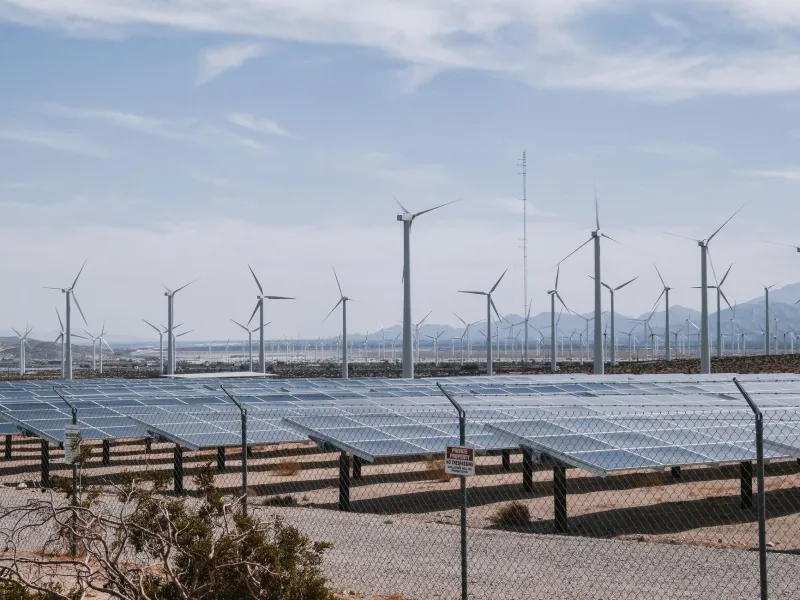
The growth of solar and wind generation in the United States has exceeded nearly every projection made at the start of the decade. The Inflation Reduction Act of 2022 — the largest climate investment in American history — extended and expanded tax credits that have catalyzed an extraordinary wave of clean energy development. In 2024, the U.S. is adding solar capacity at a rate that would have seemed extraordinary just five years ago, with utility-scale installations coming online across the Sun Belt, the Great Plains, and increasingly in markets historically dominated by fossil fuels.
Wind generation, both onshore and offshore, continues to expand. The offshore wind industry, while facing near-term headwinds from supply chain constraints and interest rate pressures, is establishing a foundation along the Atlantic coast that is expected to deliver substantial capacity before the end of the decade.
For consumers, the renewable surge carries meaningful implications. In markets where renewable penetration is high, wholesale electricity prices are increasingly shaped by hours of peak solar output — creating new pricing dynamics that reward flexible consumption and storage. For utilities, integrating high proportions of variable generation requires new operational sophistication and infrastructure investment. The economics of clean energy have arrived. The engineering challenge of reliability now commands equal attention.
3. Grid Modernization: The Infrastructure Imperative
America's transmission and distribution infrastructure was not designed for the energy system now being built upon it. Much of the grid's foundational hardware dates to the mid-twentieth century, engineered for one-directional power flow from large central plants to passive consumers. The emerging grid — characterized by distributed generation, bidirectional flows, electric vehicle charging loads, and real-time price signals — demands something fundamentally different.
The Department of Energy and the Federal Energy Regulatory Commission have both identified transmission expansion as a critical bottleneck in the clean energy transition. Permitting reform, interregional transmission planning, and the deployment of advanced grid technologies — including dynamic line ratings, power flow controllers, and grid-scale sensors — are moving from policy discussion to active implementation.
At the distribution level, utilities are investing in smart meters, automated switching equipment, and advanced distribution management systems that allow for greater visibility and control over increasingly complex local networks. These investments are not optional. They are the prerequisite for a grid capable of reliably serving a decarbonizing economy.
For ratepayers, grid modernization represents a near-term cost with long-term returns: greater resilience, fewer outages, and the operational foundation required to integrate lower-cost clean resources at scale.
4. Storage Breakthroughs: The Missing Piece Falls Into Place
For years, the central argument against deep renewable penetration was temporal mismatch: the sun does not shine at night, and the wind does not blow on demand. Battery storage was the theoretical answer, but the economics were prohibitive. That calculus has changed.
Lithium-ion battery costs have fallen by more than 90 percent over the past decade. Utility-scale battery storage deployments in the United States set new records in 2023 and are on pace to do so again in 2024. California, Texas, and several other states now operate grids where battery storage is actively dispatched to manage evening demand peaks — a function once served exclusively by gas-fired peaker plants.
Beyond lithium-ion, a new generation of storage technologies is advancing toward commercial deployment. Long-duration storage solutions — including iron-air batteries, flow batteries, and compressed air energy storage — promise to address the seasonal and multi-day storage needs that four-hour lithium systems cannot economically serve. The storage revolution is not a future event. It is happening now, and its trajectory suggests that the reliability argument against renewable energy will become progressively less tenable with each passing year.
For consumers, storage creates new possibilities: home battery systems that provide backup power during outages, virtual power plant programs that compensate households for sharing stored energy with the grid, and time-of-use rate structures that reward charging during low-cost, high-renewable periods.
5. Policy and Market Evolution: Rules Written for a New Era
Energy markets and regulatory frameworks in the United States were largely designed in the 1990s, calibrated for a world of commodity-priced fossil generation and vertically integrated utilities. Neither assumption holds cleanly in 2024. The policy environment is evolving in response, though not always at the speed the transition demands.
The Inflation Reduction Act fundamentally altered the investment calculus for clean energy across the country. The Bipartisan Infrastructure Law directed tens of billions of dollars toward grid hardening, clean hydrogen development, and advanced nuclear demonstration projects. At the state level, more than half of U.S. states now operate under renewable portfolio standards or clean energy standards that establish mandatory generation targets.
Market design is also shifting. Regional transmission organizations are grappling with how to compensate storage, distributed resources, and demand response within capacity markets originally designed for dispatchable thermal generation. The outcome of these market design debates will substantially influence which technologies get built, where, and at what cost to consumers.
From our vantage point at Pipps Energy, the policy trajectory — while subject to the uncertainties of electoral cycles and regulatory process — points clearly toward a sustained expansion of clean energy investment and grid modernization. The companies and communities that position themselves to benefit from this transition, rather than resist it, will be best placed to thrive in the energy economy taking shape around us.
A Grid Built for the Future
The five transitions described here are not independent developments. They are interconnected, mutually accelerating, and collectively irreversible. Coal's exit creates space for renewables. Renewables require storage and grid modernization. Storage unlocks new market structures. Policy frameworks shape the pace and distribution of benefits across the system.
Navigating this transformation requires utilities, policymakers, and consumers to engage with complexity honestly — acknowledging both the extraordinary opportunity and the genuine challenges involved in replacing a century-old energy system without compromising the reliability that modern life demands.
At Pipps Energy, we are not passive observers of this transition. We are active participants, committed to making decisions today that serve our customers and our communities across the decades ahead. Powering your world sustainably is not a slogan. It is a strategy — and the transitions reshaping America's grid in 2024 make it more relevant than ever.