Silent Drains: The Hidden Energy Costs of Devices You Think Are Off
There is a particular kind of waste that is easy to overlook precisely because it is invisible. Unlike leaving a light on or running the dishwasher unnecessarily, phantom load — the electricity consumed by devices in standby or idle mode — operates entirely outside your awareness. It asks for nothing. It announces nothing. And yet, month after month, it quietly adds to your energy bill with remarkable consistency.
For the average American household, this silent consumption is not a rounding error. The Lawrence Berkeley National Laboratory has estimated that standby power accounts for roughly 5 to 10 percent of residential electricity use in the United States. Translated into dollars, that figure can represent anywhere from $100 to $200 annually for a typical home — funds that effectively purchase nothing of value.
At Pipps Energy, we believe that informed customers make better energy decisions. Understanding phantom load is one of the most actionable steps any household can take toward genuine efficiency.
What Exactly Is a Phantom Load?
The term "phantom load" refers to the electricity a device draws from the grid while it is switched off, in sleep mode, or on standby. This consumption exists because most modern electronics are never truly powered down in the traditional sense. They remain in a low-power state, waiting to respond to a remote control signal, maintain an internal clock, preserve user settings, or simply because their power supplies continue drawing current regardless of whether the device is active.
Common culprits include televisions, gaming consoles, cable and satellite boxes, desktop computers, microwaves with digital displays, coffee makers, and phone chargers left plugged in without a device attached. Each individual device may draw only a watt or two in standby, but the cumulative effect across a household stocked with dozens of such devices becomes substantial over the course of a year.
Cable boxes and digital video recorders deserve particular attention. Studies have shown that a single DVR can consume as much as 17 watts continuously — nearly as much power as when it is actively in use — because it must remain ready to record scheduled programming at any moment.
Detecting the Invisible: How to Find Your Home's Phantom Loads
Identifying where standby power is escaping your home requires a modest investment of time and, optionally, a small amount of money. The most precise method involves a plug-in energy monitor, sometimes called a kill-a-watt meter, which retails for approximately $25 to $35 at most hardware stores. By plugging this device between an outlet and your appliance, you can measure real-time wattage consumption and calculate annual costs based on your local electricity rate.
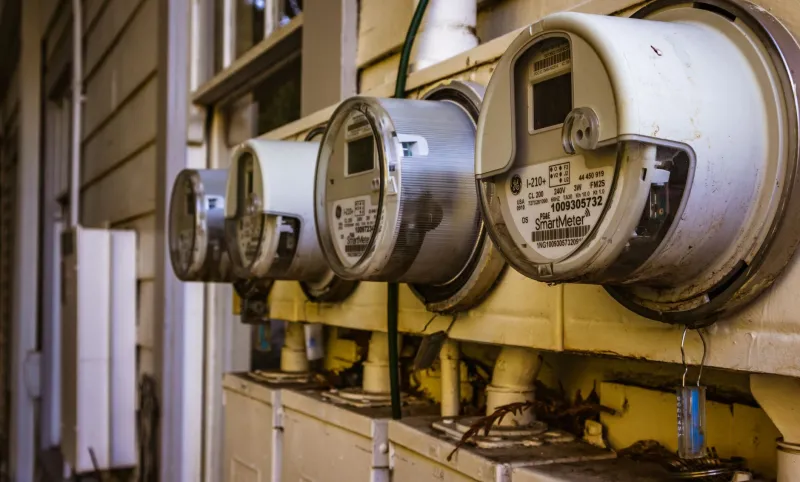
For a broader view, a whole-home energy monitor — installed at the electrical panel — provides continuous data on total household consumption, often broken down by circuit. Several utility companies across the country offer rebates or free access to such monitoring tools as part of their demand-side management programs. It is worth contacting your utility provider to determine what resources may already be available to you.
If you prefer a no-cost starting point, a simple audit works reasonably well. Walk through your home and note every device that remains plugged in at all times. Look for indicator lights, digital clocks, and warm power bricks — all are signs of active standby consumption.
The Room-by-Room Breakdown
Phantom loads distribute themselves fairly evenly throughout a home, though certain rooms tend to concentrate more waste than others.
Living Room and Entertainment Areas: This is typically the most energy-intensive zone for standby consumption. A television, a streaming device, a gaming console, a soundbar, and a cable box can collectively draw 30 to 50 watts even when the room is empty. Over a year at the national average electricity rate of approximately $0.16 per kilowatt-hour, that cluster alone could cost $40 or more.
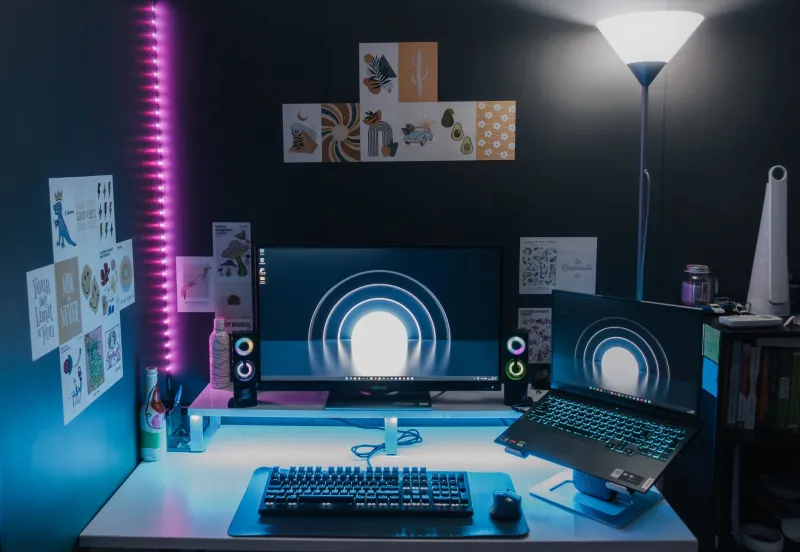
Home Office: Desktop computers left in sleep mode, external monitors, printers, and network equipment all contribute meaningfully. Routers and modems, while necessary to keep running for connectivity, can be placed on smart strips that cut power to peripherals when the main computer is off.
Kitchen: Microwaves, coffee makers, and toaster ovens with digital displays maintain small but persistent draws. A microwave's clock function, for instance, can consume more energy over the course of a year than the microwave uses for actual cooking.
Bedrooms and Hallways: Phone chargers left plugged in without a connected device still draw current. Older charger designs, in particular, are notably inefficient in this regard.
Practical Solutions With Measurable Returns
The good news is that addressing phantom load does not require significant lifestyle changes or expensive upgrades. Several straightforward interventions deliver reliable returns.
Smart Power Strips: These devices automatically cut power to peripheral outlets when a primary device — such as a television or computer — is switched off. They are particularly effective in entertainment centers and home offices where multiple devices operate in coordination. A quality smart strip costs between $25 and $50 and can pay for itself within a single year.
Smart Plugs: Wi-Fi-enabled smart plugs allow you to schedule power cutoffs and monitor individual device consumption through a smartphone application. Many models are compatible with voice assistants and home automation platforms, making it straightforward to build energy-saving routines into your existing smart home setup without adding complexity.
Unplugging Selectively: For devices used infrequently — guest room televisions, seasonal appliances, spare chargers — the simplest solution remains unplugging them entirely when not in use. This requires no technology and costs nothing.
Replacing Aging Equipment: Older electronics tend to have significantly higher standby consumption than contemporary models. When replacing appliances or electronics, look for ENERGY STAR certification, which includes standby power limits as part of its qualification criteria.
Calculating Your Return on Investment
For homeowners and renters alike, the financial case for addressing phantom load is straightforward. If your household currently loses $150 annually to standby consumption — a reasonable estimate for a home with a moderate number of electronics — and you invest $75 in smart strips and smart plugs, you recover that cost within six months. Every subsequent year, that $150 remains in your pocket rather than flowing unnoticed to the grid.
Multiplied across the tens of millions of households in the United States, the aggregate impact is considerable. Reducing standby power nationally by even a modest percentage would eliminate the need for multiple large power plants' worth of generating capacity — a meaningful contribution to grid stability and emissions reduction.
A Straightforward Path to Greater Efficiency
Phantom load is a problem defined by its subtlety. It does not announce itself, and it does not cause obvious inconvenience. But it is also one of the most accessible inefficiencies any household can address. With basic monitoring tools, a few inexpensive devices, and a clearer understanding of how modern electronics actually behave, it is entirely possible to reclaim a meaningful portion of your annual energy expenditure.
At Pipps Energy, our commitment is to help you power your world more sustainably — and that begins with ensuring you are not paying for energy that serves no purpose at all. A thorough phantom load audit is one of the highest-return investments available to any American household today.