60 Cycles Per Second: The Invisible Heartbeat That Keeps America's Grid Alive
Every appliance in your home—your refrigerator, your television, your laptop charger—is engineered around a single, unwavering assumption: that the electricity flowing through your walls oscillates at exactly 60 hertz. That means the current reverses direction 60 times every second, without pause, without deviation. It is a standard so deeply embedded in American electrical infrastructure that most people never think about it. Yet maintaining that standard requires one of the most sophisticated and continuously active balancing acts in modern engineering.
When that balance is disrupted—even slightly—the consequences are immediate and potentially severe. Generators trip offline. Industrial equipment misfires. In extreme cases, widespread blackouts follow. Grid frequency is not merely a technical footnote. It is the pulse of the entire power system, and the people responsible for keeping it steady are navigating an increasingly complicated landscape.
What Frequency Actually Measures—and Why It Matters
To understand grid frequency, it helps to think of the electrical grid as a vast, interconnected machine with thousands of moving parts. At the heart of that machine are generators—traditionally large turbines driven by steam, water, or combustion—that spin at speeds carefully calibrated to produce alternating current at exactly 60 Hz.
Frequency, in this context, is a direct reflection of the balance between supply and demand on the grid at any given moment. When electricity consumption matches electricity generation precisely, the system hums along at 60 Hz. When demand suddenly spikes—say, at halftime of a major sporting event when millions of people simultaneously open their refrigerators—generators face increased resistance. Without intervention, they begin to slow, and frequency drops.
Conversely, when generation outpaces consumption, frequency rises above 60 Hz. Both scenarios are problematic. Most grid-connected equipment is designed to operate within a narrow tolerance band, typically between 59.95 and 60.05 Hz under normal conditions. Stray too far outside that range, and protective systems begin shutting down generators and loads in sequence—a cascading failure that can escalate into a regional blackout within minutes.
The North American Electric Reliability Corporation (NERC) sets the standards that govern how tightly grid operators must maintain this equilibrium, and those standards carry real consequences for utilities that fail to comply.
The Traditional Solution—and Its Limitations
For most of the twentieth century, frequency regulation was managed through a concept called inertia. Large spinning generators—coal plants, nuclear facilities, hydroelectric dams—store enormous amounts of kinetic energy in their rotating masses. When demand shifts unexpectedly, that stored energy acts as a natural buffer, absorbing the imbalance and buying time for operators to bring additional resources online or shed unnecessary load.
This system worked remarkably well for decades, largely because the grid was dominated by a relatively small number of large, controllable generators. Grid operators could predict demand patterns with reasonable accuracy, schedule generation accordingly, and rely on spinning inertia to smooth out the gaps.
But the energy landscape has changed fundamentally, and the old assumptions no longer hold.
How Renewable Energy Is Rewriting the Rules
Solar panels and wind turbines generate electricity through fundamentally different physical processes than conventional generators. They do not involve large spinning masses. As a result, they contribute little to no rotational inertia to the grid. When a cloud passes over a solar farm or wind speeds drop unexpectedly, generation falls rapidly—and there is no kinetic buffer to absorb the change.
This is not an argument against renewable energy. The environmental and economic case for wind and solar has never been stronger, and the transition toward cleaner generation is both necessary and well underway. But it does mean that grid operators must compensate for the loss of inertia through other means, and doing so at scale requires new thinking.
The challenge is compounded by the distributed nature of modern renewable generation. Rather than a handful of large plants, today's grid increasingly draws from thousands of smaller sources—rooftop solar arrays, community wind projects, behind-the-meter storage systems. Coordinating this distributed network in real time, while maintaining frequency stability, is an order of magnitude more complex than managing the centralized systems of the past.
The Technologies Stepping Into the Breach
Grid operators and technology companies are responding with a range of solutions designed to replicate—or in some cases, improve upon—the stabilizing functions that spinning inertia once provided.
Grid-scale battery storage has emerged as one of the most promising tools. Unlike conventional generators, batteries can respond to frequency deviations in milliseconds, injecting or absorbing power far faster than any turbine can accelerate or decelerate. Several large-scale battery installations across the United States are already providing frequency regulation services, effectively acting as electronic shock absorbers for the grid.
Synthetic inertia, offered by modern wind turbines and inverter-based resources, uses sophisticated control software to mimic the stabilizing behavior of rotating machinery. By rapidly adjusting power output in response to frequency signals, these systems can provide a functional equivalent of inertia without any spinning mass.
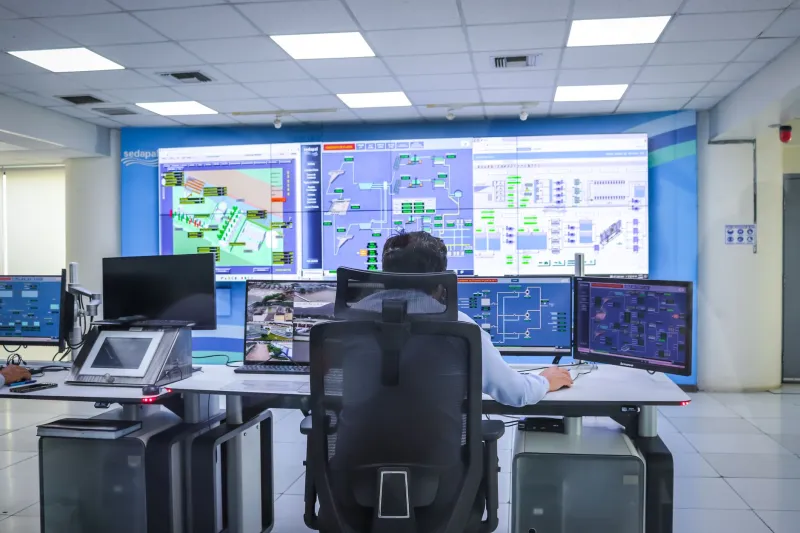
Advanced grid monitoring technologies, including phasor measurement units (PMUs) that sample grid conditions thousands of times per second, give operators unprecedented visibility into frequency dynamics across wide geographic areas. This real-time awareness enables faster, more targeted responses to emerging imbalances.
Why Your Participation Actually Helps
Here is where the story takes a turn that may surprise you. Grid frequency regulation is not solely the domain of engineers and utility control rooms. Ordinary energy customers play a measurable role—particularly those enrolled in demand response programs.
Demand response programs, offered by many utilities across the country, compensate customers for agreeing to reduce or shift their electricity consumption during periods of grid stress. When frequency begins to drift and operators need to shed load quickly, these enrolled customers represent a flexible, rapidly deployable resource. Smart thermostats, water heaters, and industrial equipment can be curtailed automatically within seconds of a frequency event, helping to restore balance before the deviation becomes a crisis.
This is not a hypothetical benefit. Utilities and grid operators actively value demand response as a frequency regulation resource, and customers who participate are compensated accordingly. At Pipps Energy, we view demand response not as an inconvenience to customers but as a genuine partnership—one that creates value for participants while strengthening the resilience of the broader system.
As the grid incorporates more renewable generation and the need for fast-acting flexibility grows, the contributions of engaged, responsive customers become increasingly significant. The 60 Hz standard that protects your appliances is maintained, in part, by the collective behavior of millions of people making informed choices about when and how they use energy.
A Standard Worth Protecting
Grid frequency may be invisible, but its implications are anything but abstract. It governs the reliability of the electricity that powers hospitals, data centers, manufacturing facilities, and homes across the continent. Maintaining it in an era of rapid energy transition requires investment, innovation, and the active engagement of everyone connected to the system.
The next time you plug something into the wall, consider the extraordinary coordination happening behind that simple act—and the growing role that smarter, more flexible energy choices play in keeping that coordination intact.