The Invisible Journey: How Electricity Travels Hundreds of Miles Before It Reaches Your Outlet
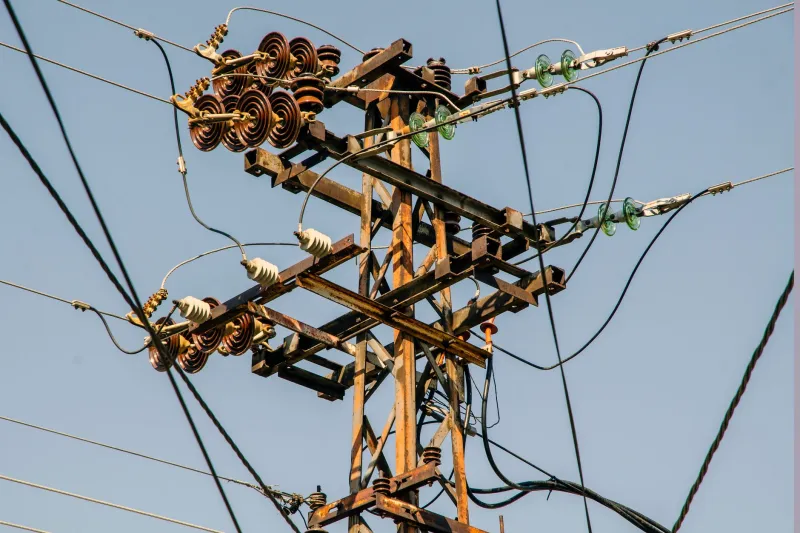
When you flip a light switch, the transaction feels immediate and local. The electricity appears, the room brightens, and the moment passes without further consideration. What most Americans do not realize is that the electrons responsible for that simple act may have originated at a power plant hundreds of miles away, traveled across multiple state borders, passed through several layers of infrastructure, and arrived at your home carrying the accumulated costs of that entire journey. The American power grid is, in many respects, a vast and largely invisible highway system—and like any highway, it experiences congestion, inefficiency, and wear that ultimately reaches the consumer's wallet.
How the American Grid Actually Works
The United States operates three primary interconnections: the Eastern Interconnection, the Western Interconnection, and the Electric Reliability Council of Texas (ERCOT). Within these broad networks, regional transmission organizations and independent system operators—entities such as PJM Interconnection, MISO, and SPP—coordinate the movement of electricity across dozens of states simultaneously.
At any given moment, grid operators are balancing supply and demand in real time, routing power from wherever it is being generated to wherever it is needed. A wind farm operating at full capacity in Kansas may be feeding electricity into the same system that serves a hospital in Ohio. A natural gas plant in Pennsylvania may be compensating for a shortfall caused by reduced output at a hydroelectric facility in New York. This constant, invisible commerce happens continuously, largely without public awareness.
The mechanics involve wholesale electricity markets where power is bought and sold in advance and in real time. Utilities, municipalities, and large industrial customers participate in these markets either directly or through intermediaries. The prices they pay—and ultimately pass along to residential customers—are shaped not only by local generation costs but by conditions prevailing across an entire regional network.
Transmission Losses: The Electricity That Never Arrives
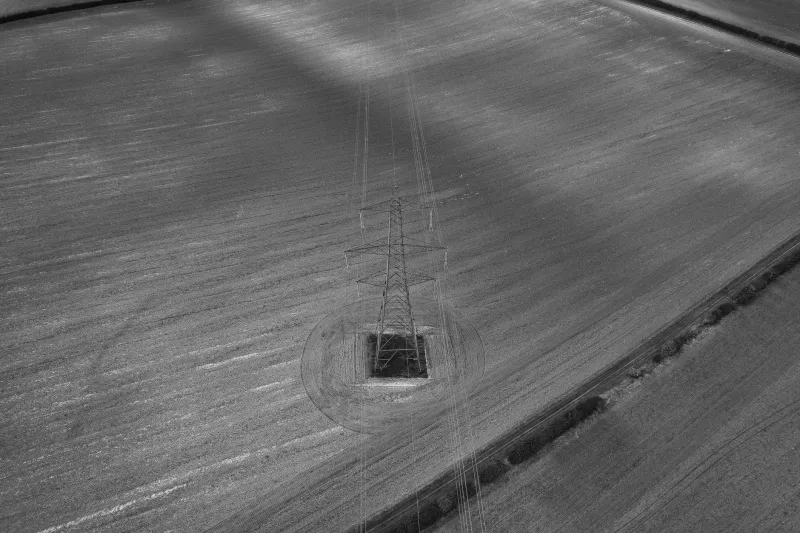
One of the least-discussed realities of long-distance power delivery is transmission loss. Electricity moving through high-voltage lines encounters resistance, and that resistance converts a portion of the energy into heat that dissipates into the surrounding environment. The U.S. Energy Information Administration has estimated that transmission and distribution losses account for approximately five to six percent of total electricity generated nationally each year.
That figure may sound modest in isolation. Scaled across the entire country, however, it represents an enormous quantity of energy that is produced, paid for, and never actually consumed. Those losses are embedded in the rates that utilities charge their customers. When a power plant generates electricity destined for a distant market, the cost of the energy that evaporates along the way does not disappear—it is distributed across the rate base.
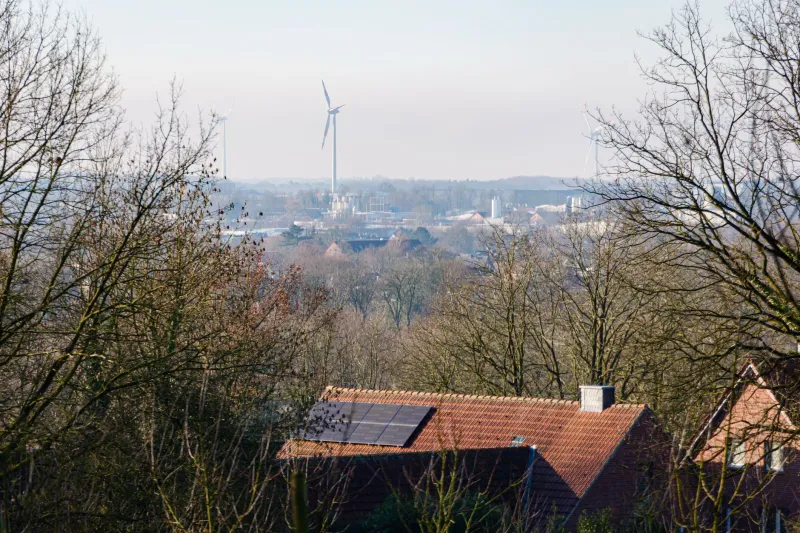
The farther electricity travels, the greater the potential for loss. This is one reason why siting generation closer to population centers has long been recognized as an efficiency advantage. It is also a central argument for expanding distributed energy resources—rooftop solar installations, community solar projects, and local battery storage systems—that reduce the distance power must travel before it reaches end users.
Congestion: When the Highway Becomes a Bottleneck
Transmission congestion occurs when the physical capacity of power lines is insufficient to carry all the electricity that generators and operators want to move. When a transmission corridor reaches its limit, grid operators must either curtail generation in one area, activate more expensive backup generation closer to the demand center, or both. The cost difference between the cheaper, distant generation and the more expensive local alternative is known as a congestion cost—and it flows directly into electricity prices.
Congestion is not a rare occurrence. In regions where transmission infrastructure has not kept pace with changing generation patterns—particularly the rapid expansion of wind and solar in rural areas far from urban load centers—congestion has become a persistent and expensive reality. Studies examining major regional markets have documented billions of dollars in annual congestion costs that are ultimately recovered through consumer rates.
The geographic mismatch between where renewable energy is being built and where transmission capacity exists represents one of the defining infrastructure challenges of the current energy transition. States with abundant wind and solar resources frequently lack the transmission corridors necessary to export that generation to markets where it is most needed. The result is a system that is simultaneously over-built in some respects and under-built in others, with ratepayers absorbing the financial consequences of that imbalance.
Interstate Power Trading and Its Effect on Your Bill
The interstate commerce of electricity creates pricing dynamics that can seem counterintuitive to residential customers. It is entirely possible for a utility customer in a state with substantial local generation to pay rates influenced by conditions in distant markets. Conversely, customers in areas with limited local resources may benefit from access to cheaper wholesale power originating far away—provided sufficient transmission capacity exists to deliver it.
Wholesale market prices, known as locational marginal prices, vary by location and time. When transmission constraints limit the flow of low-cost power into a given area, local prices rise to reflect the cost of serving that demand with available resources. These price signals are designed to incentivize investment in transmission and generation, but the adjustment process is slow and the interim costs are borne by ordinary ratepayers.
Regulatory frameworks governing interstate transmission are overseen primarily by the Federal Energy Regulatory Commission. Decisions about transmission investment, cost allocation, and market rules are made through processes that most residential customers never encounter—yet those decisions have tangible effects on monthly bills and service reliability.
What Grid Modernization Stands to Deliver
Advanced transmission technologies offer meaningful opportunities to reduce the inefficiencies embedded in today's system. High-voltage direct current lines, for example, transmit electricity over long distances with significantly lower losses than conventional alternating current infrastructure. Grid-enhancing technologies—including advanced conductors, dynamic line ratings, and sophisticated power flow control devices—can increase the capacity of existing infrastructure without requiring entirely new construction.
On the distribution side, investments in smart grid technology improve operators' ability to monitor conditions in real time, reroute power around faults, and integrate distributed resources more effectively. These capabilities reduce both the frequency and the duration of outages while enabling more efficient use of existing assets.
The economic case for modernization is compelling. Reducing transmission losses by even a fraction of a percentage point at national scale translates into substantial savings. Alleviating chronic congestion in high-cost corridors can lower wholesale prices in affected markets. And building the transmission capacity necessary to unlock stranded renewable generation has the potential to reduce average electricity costs over time as lower-marginal-cost resources displace more expensive alternatives.
Why This Matters to Every Electricity Customer
The power grid is infrastructure in the truest sense—foundational, largely invisible, and consequential in ways that extend far beyond the moments when its failures become visible. For residential customers, the relevant insight is that electricity rates reflect far more than the cost of generation at a nearby plant. They incorporate the accumulated inefficiencies, constraints, and market dynamics of a regional system operating across vast distances.
Advocating for transmission investment, supporting policies that accelerate grid modernization, and understanding the structural forces shaping energy costs are not abstract civic exercises. They are practical matters with direct bearing on what Americans pay each month and how reliably power reaches their homes. The journey electricity takes before it arrives at your outlet is long, complex, and costly—and shortening it, in every meaningful sense, is among the most important energy priorities of the coming decade.