Overloaded and Underprepared: The Structural Crisis Threatening America's Power Supply
When the lights flickered out across parts of Texas, the Midwest, and the Pacific Northwest during last summer's heat events, millions of Americans were left sweltering in darkened homes, wondering the same thing: how does the most powerful economy on earth keep losing power? The answer is neither simple nor particularly comfortable — and it points toward a future that could be considerably more disruptive than the past.
The Demand Equation Has Changed Dramatically
For most of the twentieth century, electricity demand grew at a measured, predictable pace. Utilities could plan years in advance with reasonable confidence. That era is effectively over.
Three converging forces have fundamentally altered the consumption landscape. First, climate change has extended and intensified heat seasons across virtually every region of the country. Air conditioning, once a warm-weather luxury, is now an essential medical necessity for tens of millions of Americans. When a heat dome settles over a metropolitan area for days at a stretch, residential cooling demand spikes to levels that simply did not exist in historical planning models.
Second, electric vehicles are arriving on American driveways faster than grid planners anticipated. A single EV charging at Level 2 overnight draws roughly the same electricity as an average household uses in a day. Multiply that across thousands of households in a single distribution zone, and the math becomes challenging very quickly — particularly when charging behavior clusters in the early evening hours, precisely when grid stress is already highest.
Third, the broader electrification of home heating, cooking, and water heating — driven by both environmental policy and genuine consumer interest — is layering additional load onto infrastructure that was never sized for it.
Infrastructure Built for a Different Era
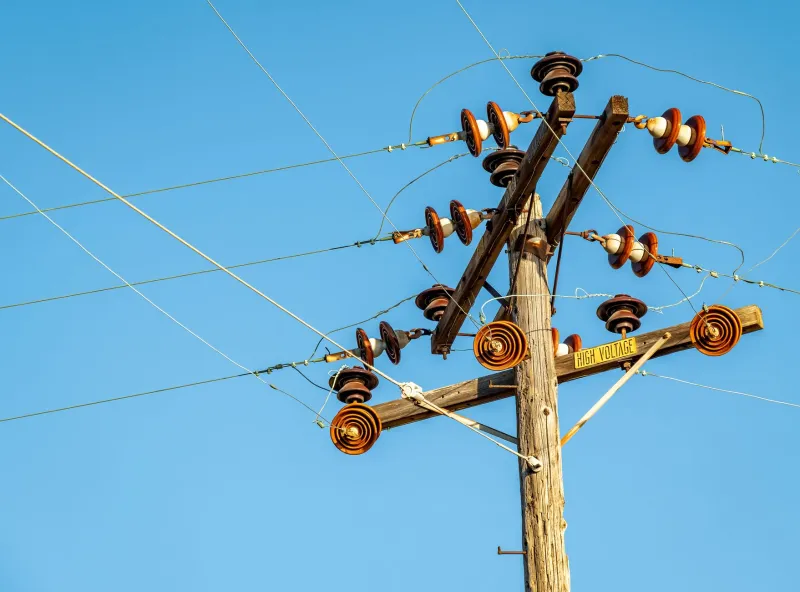
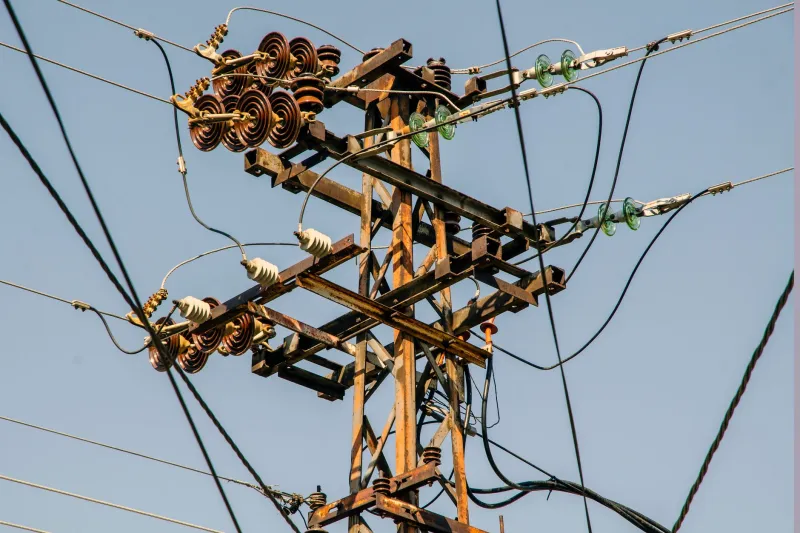
America's transmission and distribution network is, by almost any engineering measure, aging. The American Society of Civil Engineers has repeatedly assigned the nation's energy infrastructure a grade of C-minus or below. A significant portion of the country's high-voltage transmission lines and transformers were installed in the 1960s and 1970s, with design lifespans that have already been exceeded.
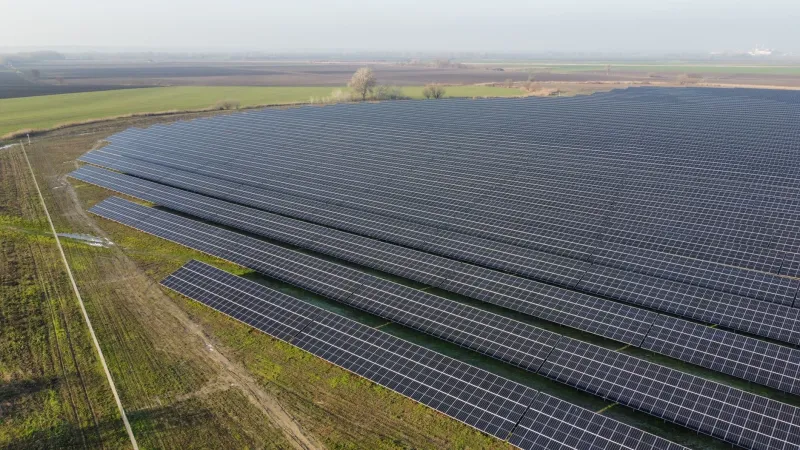
The problem is not simply age. It is the mismatch between where the grid was built and where power now needs to flow. Decades ago, electricity traveled short distances from large centralized coal or natural gas plants to nearby population centers. Today, the best renewable generation resources — wind in the Great Plains, solar in the Southwest, offshore wind along the Atlantic seaboard — are often located far from the urban centers that need the power most. Transmitting that electricity efficiently requires substantial new long-distance transmission capacity that, in most cases, has not been built.
Permitting and siting remain genuine obstacles. A major transmission line can take ten to fifteen years to plan, permit, and construct. That timeline is incompatible with the pace at which demand is growing.
How Cascading Failures Actually Work
The mechanics of a large-scale grid failure are worth understanding, because they explain why outages tend to be more severe than utilities initially expect.
Modern grids operate within narrow frequency and voltage tolerances. When demand exceeds available supply in a region, grid operators must act within seconds to restore balance — either by bringing additional generation online or by shedding load. When neither option is available quickly enough, automatic protective systems begin disconnecting equipment to prevent damage. Each disconnection shifts stress to adjacent portions of the network, which may then trip their own protective systems. In a matter of minutes, what began as a localized supply shortfall can cascade across a wide geographic area.
The 2003 Northeast blackout — still the largest in North American history — began with a software failure at a single Ohio utility and ultimately left fifty million people without power across eight states and parts of Canada. The underlying lesson has not changed: highly interconnected systems can fail rapidly and non-linearly when stressed beyond their design margins.
Recent events have reinforced this lesson at regional scale. During the February 2021 winter storm in Texas, the simultaneous failure of natural gas supply infrastructure and unexpected demand spikes pushed the state's grid within minutes of a complete collapse that could have left millions without power for weeks. Last summer's heat events produced similar, if less severe, stress events in California, the Pacific Northwest, and portions of the Southeast.
What Utilities and Policymakers Are — and Are Not — Doing
The response from the utility sector has been uneven. Some regional grid operators have accelerated transmission expansion planning and are working to streamline interconnection queues for new generation resources. The federal Bipartisan Infrastructure Law allocated substantial funding toward grid modernization, and the Inflation Reduction Act created incentives intended to accelerate both clean generation and transmission investment.
However, investment at the scale required remains far from certain. The Edison Electric Institute estimates that the U.S. needs to add or replace roughly seventy percent of its existing transmission infrastructure by 2035 to meet projected demand growth. Current investment trajectories fall well short of that target.
Regulatory frameworks in many states also create structural disincentives for proactive grid investment. Utilities operating under traditional cost-of-service regulation may lack the financial incentives to invest ahead of demonstrated need — and by the time need is demonstrated through actual failures, the investment timeline makes rapid remediation impossible.
The Household Reality
For residential customers, the practical implications are straightforward: the probability of experiencing significant outages is rising, not falling, in most parts of the country. Heat-related demand peaks will intensify. The integration of EVs and electrified appliances will add load that existing neighborhood-level distribution infrastructure was not designed to handle.
This does not mean that individual households are powerless. Participating in demand response programs, shifting discretionary electricity use away from peak hours, and investing in on-site storage or backup generation capacity are all meaningful responses. But they are supplements to, not substitutes for, the large-scale infrastructure investment that the grid genuinely requires.
At Pipps Energy, we believe that an informed customer is the most important participant in the energy transition. Understanding why the grid is under pressure — and what it will take to relieve that pressure — is essential context for every energy decision households and businesses make today.
A Problem That Demands Urgency
The grid's current difficulties are not the product of bad luck. They reflect structural decisions — or the absence of decisions — made over many years regarding investment, planning, and policy. The encouraging reality is that the technical solutions are well understood. The generation resources exist. The storage technologies are maturing rapidly. The engineering knowledge required to build a more resilient network is available.
What has been missing, in too many cases, is the combination of political will, regulatory clarity, and investment commitment required to translate that knowledge into infrastructure at the pace the situation demands. The summers ahead will test whether that gap can be closed before the consequences become significantly more severe than anything experienced to date.