Shared Sun: How Community Solar Is Opening Renewable Energy to Everyone
The promise of solar energy has always been compelling: generate your own clean electricity, reduce dependence on the grid, and lower your monthly utility costs over time. For years, however, that promise came with a significant asterisk. To participate, you needed to own your home, possess a roof with the right orientation and sufficient sunlight exposure, have the financial capacity to absorb a substantial upfront installation cost or qualify for a loan, and be willing to commit to a system that would remain attached to a structure you might sell or leave behind.
For roughly half of all American households — including the nation's 44 million renters, condominium owners, and the many homeowners whose properties simply are not suited to rooftop installation — those requirements have historically closed the door entirely.
Community solar is dismantling that barrier, and it is doing so faster than most observers anticipated.
The Basic Architecture of a Community Solar Program
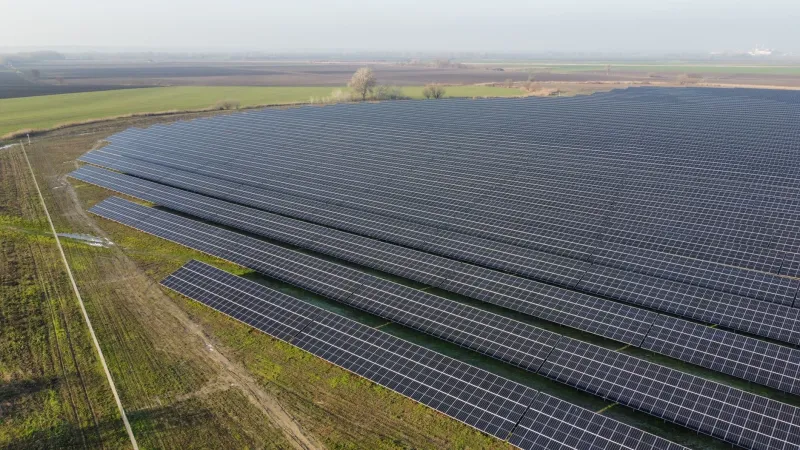
At its core, community solar operates on a deceptively simple principle. A solar array — typically ranging from one to five megawatts in generating capacity — is constructed at a centralized location, often on commercial rooftops, brownfields, agricultural land, or utility-owned parcels. Individual subscribers then purchase or lease a portion of that array's output, receiving a credit on their regular utility bill that reflects the electricity their share of the project actually generated.
The subscriber does not own the panels, does not need a ladder, and does not need to interact with the physical installation in any way. Their relationship with the community solar project is essentially a financial and contractual one, mediated through their existing utility account. When the sun shines on the array, their bill goes down.
This structure is sometimes called a "virtual net metering" arrangement, because the credit mechanism functions similarly to the net metering credits that rooftop solar owners receive — except the generation is happening at a remote location rather than on the subscriber's own property.
Who Is This Model Actually Designed For?
Community solar's subscriber base is meaningfully more diverse than the rooftop solar market, and that diversity is a central part of its value proposition.
Renters represent perhaps the most obvious beneficiary group. With no ownership stake in their building and no authority to install equipment, renters have historically been entirely excluded from residential solar participation. Community solar changes that calculus entirely. A renter in Denver, Minneapolis, or suburban Maryland can subscribe to a local solar project, receive monthly bill credits, and cancel their subscription if they move — often with as little as 30 to 90 days' notice under many program structures.
Apartment and Condominium Residents face similar constraints. Even when building owners are theoretically open to rooftop solar, the complexity of allocating benefits across multiple units, navigating homeowner association rules, and managing a shared physical asset frequently makes rooftop installation impractical. Community solar sidesteps all of that.
Homeowners With Unsuitable Roofs constitute a larger segment than is commonly acknowledged. Significant tree cover, east-west roof orientations, aging shingles requiring replacement before installation, or simply insufficient square footage can each render rooftop solar uneconomical. Community solar offers these homeowners a path to equivalent benefits without requiring any modification to their property.
Low- and Moderate-Income Households have increasingly become a specific focus of program design. Many states, including Illinois, New York, New Jersey, and Massachusetts, have established dedicated low-income carve-outs within their community solar frameworks, offering deeper discounts — sometimes 15 to 20 percent below standard utility rates — to qualifying subscribers.
The Financial Mechanics: What Does Participation Actually Cost?
The financial structure of community solar subscriptions varies by program and by state, but a general framework applies across most of the market.
Subscribers typically pay a rate for their solar energy that is set at a discount to their utility's standard retail rate — commonly between 5 and 15 percent below what they would otherwise pay for grid electricity. This discount is the primary financial incentive. Because the subscriber is paying less per kilowatt-hour for the portion of their electricity covered by their solar share, their net monthly bill decreases proportionally.
The size of a subscription is generally calibrated to cover a meaningful portion of a household's monthly consumption — often 50 to 100 percent, depending on the project's capacity and the subscriber's usage profile. Providers typically conduct an analysis of 12 months of historical utility data before recommending a subscription size, which helps ensure the arrangement is genuinely beneficial rather than oversized.
Contracts range considerably in length. Some programs offer month-to-month arrangements, while others involve terms of 20 to 25 years — comparable to the lifespan of the solar installation itself. Longer-term agreements sometimes offer larger discounts but carry more commitment. Reading contract terms carefully, particularly regarding cancellation policies and rate escalators, is essential before signing.
The State-by-State Landscape
Community solar's availability and structure depend heavily on state policy, which has produced a patchwork of program designs across the country.
Minnesota was among the earliest states to establish a formal community solar framework, launching its Shared Solar program in 2014. The state now hosts one of the largest community solar markets in the nation, with hundreds of megawatts of subscribed capacity.
New York's Community Distributed Generation program has expanded rapidly, supported by the state's ambitious clean energy targets and a robust net metering credit structure.
Illinois, through its Illinois Shines program, has placed particular emphasis on equity, requiring that a defined percentage of community solar capacity serve low-income subscribers.
Colorado, Massachusetts, New Jersey, Maryland, and Oregon each operate mature programs with substantial subscriber bases. As of 2024, more than 40 states have at least some form of community solar activity, though the depth and accessibility of programs varies considerably.
For residents of states without formal enabling legislation, the landscape remains more limited — though federal policy developments and growing utility interest in voluntary programs are gradually expanding options even in less-active markets.
Addressing the Most Common Points of Confusion
Despite community solar's growth, several persistent misconceptions continue to create hesitation among potential subscribers.
"I will still have a utility bill." Correct — and this is by design. Community solar credits appear as line items on your existing utility bill, reducing the amount owed. You do not leave your utility; you simply reduce the cost of remaining connected to it.
"What happens if I move?" Most programs accommodate relocation within the same utility service territory with minimal friction. Moving out of the territory typically triggers a cancellation process, the terms of which vary by contract. Reviewing portability provisions before subscribing is advisable.
"Is this too good to be true?" The discount structure is real and is enabled by the economics of utility-scale solar generation, which benefits from lower per-unit installation costs than residential rooftop systems. That said, as with any financial product, the quality of individual programs and developers varies. Selecting providers with established track records and transparent contract terms is important.
A Maturing Market With Expanding Reach
Community solar represents one of the more significant structural shifts in how American households access renewable energy. By decoupling the benefits of solar generation from the physical constraints of individual property ownership, it extends the economic and environmental advantages of clean power to a population that has historically been excluded from that conversation.
For renters, apartment residents, and the many homeowners for whom rooftop solar has never been a realistic option, a community solar subscription may represent the most straightforward path available to meaningfully reducing both their energy costs and their carbon footprint.
At Pipps Energy, we view the growth of community solar as an encouraging development in the broader transition toward a more equitable and sustainable energy system — one where access to clean power is not determined by the angle of your roof or the terms of your lease.