Crumbling Wires, Rising Bills: The True Cost of America's Aging Power Grid
The electricity flowing into your home right now may have traveled through infrastructure older than your parents. A substantial portion of the United States' transmission and distribution network was constructed between the 1950s and 1970s, designed for a mid-century load profile that bears little resemblance to modern consumption patterns. Today, that mismatch is becoming increasingly difficult—and expensive—to manage.
For utility customers across the country, the consequences are not abstract. They appear in longer outage durations, more frequent service interruptions, and, inevitably, rate adjustments tied to the capital expenditures required to address decades of deferred maintenance.
The Scope of the Problem
According to the American Society of Civil Engineers, the nation's energy infrastructure earns a grade of C-minus—a score that reflects both the age of physical assets and the pace at which replacements are being made. The United States loses more power per customer per year than most other developed nations, with the average American experiencing roughly eight hours of power interruptions annually. That figure climbs considerably higher in regions prone to severe weather events.
The economic toll is significant. The Department of Energy has estimated that power outages cost the American economy between $150 billion and $200 billion each year, accounting for lost productivity, spoiled inventory, disrupted healthcare services, and damage to sensitive equipment. These costs are not borne by utilities alone—they ripple outward to every household and business connected to the grid.
Transmission lines represent one of the most pressing concerns. Approximately 70 percent of the nation's high-voltage transmission lines are more than 25 years old, and many are approaching or have already exceeded their designed operational lifespan. Transformers, which are critical to stepping voltage up and down across the network, face similar challenges. Large power transformers can take 12 to 18 months to manufacture and deliver, meaning that when a critical unit fails, restoration timelines can stretch far longer than most customers anticipate.
Regional Vulnerabilities
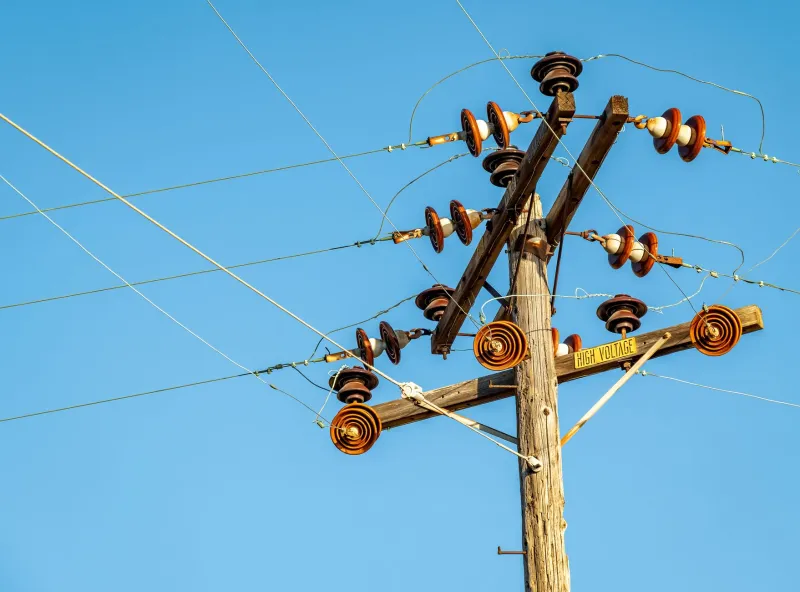
The risk is not distributed evenly. Utilities operating in the Northeast contend with an aging underground cable network in dense urban corridors, while providers across the Southeast and Gulf Coast manage infrastructure repeatedly stressed by hurricane-force winds and flooding. The Pacific Northwest faces wildfire-related risks that have accelerated the physical deterioration of overhead lines and wooden utility poles.
Texas, which operates its own largely isolated grid through ERCOT, drew national attention following the February 2021 winter storm that left millions without power for days. That event underscored how inadequate weatherization of aging generation and transmission assets—even in a relatively mild climate—can produce catastrophic outcomes when conditions fall outside historical norms.
Midwestern utilities, meanwhile, are grappling with the dual challenge of replacing aging coal-fired generation while simultaneously reinforcing transmission corridors to accommodate wind energy resources located far from population centers. The geographic complexity of that transition adds both cost and timeline uncertainty.
What Modernization Actually Involves
The term "grid modernization" encompasses a wide range of investment categories, each with distinct cost profiles and ratepayer implications.
At the transmission level, utilities are replacing aging conductors, upgrading substation equipment, and installing advanced monitoring technology that can detect faults before they cascade into widespread outages. These investments are capital-intensive and often span multiple years, with costs recovered through rate cases approved by state public utility commissions.
At the distribution level—the local network of poles, wires, and transformers that delivers power to individual addresses—the focus has shifted toward automation and self-healing capabilities. Automated switching equipment can isolate a fault and reroute power within seconds, dramatically reducing the number of customers affected by any single failure. Utilities that have deployed these systems report meaningful reductions in outage frequency, though the upfront investment is substantial.
Cybersecurity represents an increasingly prominent line item in modernization budgets. As more grid components become digitally connected and remotely operable, the attack surface for malicious actors expands. Federal regulators have responded with stricter reliability standards, and utilities are investing accordingly—costs that, like physical infrastructure upgrades, ultimately flow through to customer rates.
The Rate Implications
For residential customers, the central question is straightforward: how much will this cost me?
The honest answer is that rates will rise in most service territories over the coming decade, though the magnitude will vary considerably depending on a utility's starting point, its regulatory environment, and the efficiency with which it executes its capital program. Utilities that deferred maintenance aggressively over the past two decades face steeper catch-up costs than those that invested more consistently.
State regulatory commissions play a critical role in moderating the consumer impact. Rate cases—the formal proceedings through which utilities propose and justify rate adjustments—provide an opportunity for consumer advocates and regulators to scrutinize the reasonableness of proposed expenditures. In many states, performance-based ratemaking frameworks are being introduced to link utility revenue to measurable outcomes such as outage frequency and duration, creating financial incentives to deploy capital efficiently rather than simply spending more.
Federal funding through the Infrastructure Investment and Jobs Act has injected meaningful resources into grid modernization, with tens of billions of dollars directed toward transmission expansion, resilience improvements, and smart grid technology deployment. These funds can offset a portion of what would otherwise fall entirely on ratepayers, though they represent a fraction of the total investment need identified by industry analysts.
What Consumers Can Do Now
While the scale of grid modernization is largely beyond the control of individual customers, there are practical steps households can take to reduce their exposure to the costs and disruptions associated with an aging system.
Backup power options—ranging from whole-home standby generators to battery storage systems paired with solar panels—have become more accessible and cost-competitive in recent years. For households in areas with elevated outage risk, the economics of these solutions deserve careful consideration.
Engaging with your utility's rate proceedings and customer advisory processes also matters. Public utility commissions typically hold open comment periods during rate cases, and consumer participation influences how regulators evaluate utility proposals. Ratepayers who understand the infrastructure investment driving a proposed rate increase are better equipped to assess whether the request is reasonable.
Finally, reducing overall energy consumption through efficiency improvements lessens the financial impact of any rate increase on a household's total bill. Efficiency measures that reduce kilowatt-hour consumption provide a direct hedge against rising per-unit costs—a dynamic that makes efficiency investments increasingly attractive as infrastructure spending accelerates.
The Decade Ahead
The gap between the pace of infrastructure decay and the pace of investment will not close quickly. Utilities, regulators, and policymakers are navigating a challenge that has accumulated over generations, and the solutions are measured in years and decades rather than months. For consumers, awareness is the starting point—understanding why bills are likely to increase, what that spending is intended to accomplish, and where accountability mechanisms exist to ensure the investment delivers on its promise.