Cold Weather, Higher Bills: Understanding Why Heat Pumps Struggle When Temperatures Plunge
The Efficiency Promise Meets Winter Reality
Heat pumps have earned a well-deserved reputation as one of the most energy-efficient heating solutions available to American homeowners. By transferring heat rather than generating it through combustion or direct electrical resistance, a modern heat pump can deliver two to four units of thermal energy for every unit of electricity consumed—a performance ratio no conventional furnace can match.
Yet each winter, a predictable wave of confusion washes over households that made the switch. Bills climb. Thermostats seem unresponsive. And the technology that promised savings appears to be doing the opposite. The system, in most cases, is working exactly as designed. The problem lies not in the equipment but in a set of physical and operational realities that rarely appear in sales brochures.
Understanding those realities is the first step toward managing them effectively.
How Heat Pumps Actually Extract Heat from Cold Air
The core principle behind a heat pump is counterintuitive: even frigid outdoor air contains usable thermal energy. A heat pump's refrigerant cycle captures that energy and concentrates it indoors. In mild to moderately cold conditions—say, temperatures above 35 to 40 degrees Fahrenheit—this process operates with impressive efficiency.
The challenge emerges as outdoor temperatures drop further. The colder the air, the less heat energy it holds, and the harder the system must work to extract a meaningful quantity of it. Efficiency, measured by the coefficient of performance (COP), declines steadily with falling temperatures. A heat pump that delivers a COP of 3.5 on a 45-degree day may operate at a COP closer to 1.5 when temperatures dip into the low twenties.
At that lower efficiency level, the system is consuming nearly as much electricity per unit of heat delivered as a direct resistance heater would. The economic advantage narrows considerably.
The Role of Backup Resistance Heating
Most heat pumps installed in the United States—particularly those paired with air handlers rather than hydronic systems—include auxiliary or emergency electric resistance heating strips. These strips function essentially as large electric space heaters embedded within the system, activating automatically when the heat pump alone cannot maintain the desired indoor temperature.
This backup mechanism is both necessary and expensive. Electric resistance heating has a COP of exactly 1.0—it converts electricity to heat at a one-to-one ratio, with no efficiency multiplier. When outdoor temperatures fall below what engineers call the system's balance point (the threshold at which heat pump output equals heating demand), the resistance strips engage. In many northern and mid-Atlantic climates, that balance point is crossed repeatedly throughout the winter.
The result is a heating system that functions efficiently during moderate cold snaps but reverts to one of the least efficient forms of electric heat during the most demanding periods. Homeowners often notice a dramatic increase in electricity consumption during extended cold stretches—not because the heat pump is malfunctioning, but because the backup strips are carrying a disproportionate share of the load.
Regional Climate and the Geography of Heat Pump Economics
The economics of heat pump operation are not uniform across the country. In the Pacific Northwest, the Mid-Atlantic, and much of the South, winter temperatures rarely sustain the kind of prolonged deep freezes that push heat pumps into extended backup operation. In these regions, the technology delivers on its efficiency promise throughout most of the heating season.
The calculus shifts in the Upper Midwest, New England, and mountain states, where weeks of sub-freezing temperatures are routine. Homeowners in Minneapolis or Burlington face a fundamentally different operating environment than those in Charlotte or Portland. In colder climates, the auxiliary strips may run for significant portions of the winter, and the overall seasonal efficiency of the system—measured by the Heating Seasonal Performance Factor (HSPF)—can fall short of the figures cited in marketing materials, which are typically derived from standardized test conditions rather than real-world cold-climate performance.
This regional variation is a critical factor that prospective heat pump buyers should discuss candidly with their energy provider or HVAC contractor before committing to a system.
Cold-Climate Heat Pumps: A Meaningful Advancement
The technology itself has not stood still. The past decade has brought significant advances in cold-climate heat pump designs, often referred to as variable-speed or inverter-driven systems. Unlike older single-stage equipment, these units modulate their compressor speed continuously, maintaining meaningful efficiency at temperatures well below zero degrees Fahrenheit.
Several manufacturers now offer systems rated for efficient operation down to minus 13 degrees Fahrenheit or lower, with COP values that remain above 1.5 even in extreme cold. For homeowners in harsh climates, these advanced systems represent a substantive improvement over older heat pump technology and can dramatically reduce dependence on backup resistance heating.
The trade-off is upfront cost. Cold-climate heat pumps carry a higher purchase price than standard units, and the financial payback period depends heavily on local electricity rates, climate data, and any available federal or state incentives—including the tax credits established under the Inflation Reduction Act, which can offset a meaningful portion of installation costs.
Practical Strategies for Reducing Winter Operating Costs
For homeowners already operating a heat pump, several practical measures can reduce winter electricity costs without compromising comfort.
Avoid aggressive thermostat setbacks. Unlike gas furnaces, heat pumps recover slowly from large temperature drops. Setting the thermostat back significantly at night and then demanding a rapid morning warm-up often triggers extended backup strip operation. Smaller, more gradual temperature adjustments are more efficient.
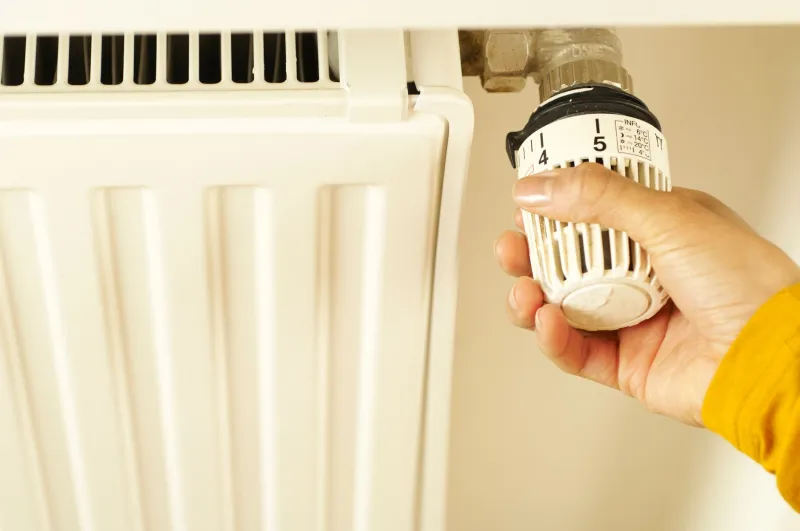
Use a heat-pump-compatible smart thermostat. Standard smart thermostats are programmed with recovery algorithms designed for conventional systems. Heat-pump-compatible models anticipate recovery time differently, reducing the likelihood of unnecessary backup activation.
Schedule professional maintenance annually. Refrigerant charge issues, dirty coils, and airflow restrictions all degrade heat pump efficiency. A well-maintained system operates closer to its rated performance in all conditions.
Consider a dual-fuel configuration. In climates where deep cold is common, pairing a heat pump with a gas furnace as backup—rather than electric resistance strips—can provide the best of both approaches. The heat pump handles moderate-temperature heating efficiently; the furnace takes over when temperatures drop to levels where gas combustion becomes more cost-effective than resistance electricity.
Monitor your system's balance point. Work with your HVAC contractor to understand the outdoor temperature at which your specific system begins relying on backup heat. This figure, combined with local historical weather data, gives you a realistic picture of how often auxiliary heating will engage in a typical winter.
Setting Realistic Expectations
Heat pumps represent a genuine advancement in residential heating technology, and for a large portion of the American population, they deliver meaningful efficiency gains and lower annual energy costs compared to conventional systems. The technology's limitations in extreme cold are real but manageable—particularly as equipment improves and homeowners become more familiar with optimal operating practices.
The key is informed decision-making. A heat pump that performs beautifully in Raleigh may require supplemental strategies in Rochester. Understanding your local climate, your system's capabilities, and the role of backup heating transforms a confusing winter electricity bill into a comprehensible and addressable outcome.
At Pipps Energy, we believe that sustainable energy choices work best when they are grounded in accurate information. If you have questions about how heat pump performance applies to your specific situation, our customer service team is available to help you evaluate your options and optimize your home's energy profile for every season.