Home Battery Storage Decoded: Cutting Through the Hype to Find the Real Financial Case
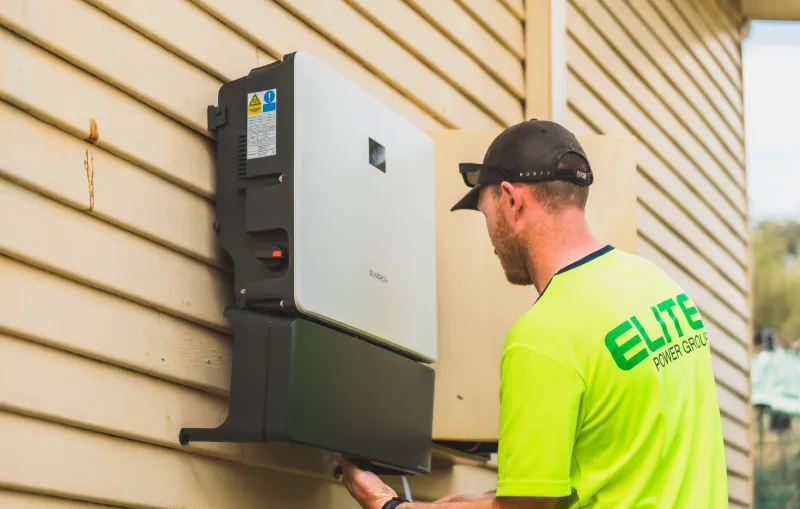
The marketing language surrounding home battery systems has grown increasingly confident. Manufacturers promise energy independence, protection from outages, and meaningful reductions in monthly electricity costs. Retailers present sleek, wall-mounted units as the natural next step after rooftop solar. And as grid reliability concerns have mounted—driven by extreme weather events, aging infrastructure, and growing demand from electric vehicles and electrified appliances—the appeal of having stored energy on hand has become genuinely compelling for many American households.
But enthusiasm and economics are not always aligned. The decision to install a home battery system involves a significant upfront expenditure, a set of technical trade-offs that are rarely explained clearly in sales materials, and a financial calculus that depends heavily on factors specific to your location, your utility, and your existing energy setup. This guide is designed to help you navigate that calculus with clarity.
Understanding What a Home Battery Actually Does
A residential battery storage system stores electrical energy—typically generated by a solar array, drawn from the grid during off-peak periods, or both—and makes it available for use when it is most needed or most economical. The two primary use cases are backup power during outages and bill reduction through strategic energy management.
These are distinct value propositions with different financial profiles, and conflating them is one of the most common sources of confusion among homeowners evaluating storage options.
Backup power provides resilience and peace of mind. It has real value, particularly in regions prone to severe weather, wildfires, or extended outages, but it does not by itself generate a financial return in the traditional sense. You are paying for insurance against an event that may or may not occur.
Bill reduction through energy arbitrage—charging the battery when electricity is cheap and discharging it when rates are high—does generate a measurable financial return, but only in markets where the rate differential is sufficient to justify the investment. This is where geography becomes decisive.
The Cost Landscape in 2024
Battery prices have fallen substantially over the past decade. The cost of lithium-ion battery cells has dropped by more than 90 percent since 2010, and that trend has gradually translated into lower prices for consumer-facing storage products, though installation costs, inverter hardware, and permitting fees mean that the total installed cost remains significant.
A single-battery system from a major manufacturer—the Tesla Powerwall, Enphase IQ Battery, LG RESU, or Franklin WH series are among the most widely deployed options in the US market—typically costs between $10,000 and $15,000 fully installed for a unit with 10 to 13 kilowatt-hours of usable capacity. Larger systems with multiple batteries or higher power output can run $20,000 to $40,000 or more.
The federal Investment Tax Credit, extended and expanded under the Inflation Reduction Act, currently allows homeowners to claim a 30 percent credit on the cost of a battery system installed in conjunction with solar, and as of 2023, standalone battery installations also qualify for this credit regardless of whether solar is present. This meaningfully improves the economics for systems installed through 2032, when the credit is scheduled to begin stepping down.
Payback Timelines: What the Numbers Actually Show
Payback period—the time required for accumulated savings to equal the initial investment—varies widely based on local electricity rates, utility rate structures, available incentives, and system usage patterns.
In states with high electricity rates and time-of-use pricing—California, Hawaii, New York, Massachusetts, and Connecticut are prominent examples—the economics of battery storage are most favorable. A homeowner in California paying blended rates above 25 cents per kilowatt-hour, enrolled in a time-of-use plan where peak rates exceed 50 cents, and paired with a solar array can reasonably expect a payback period in the range of seven to twelve years for a single-battery system after the federal tax credit.
In states with lower electricity rates—much of the Southeast and portions of the Midwest where rates average 10 to 13 cents per kilowatt-hour—the arbitrage opportunity is smaller and payback timelines extend considerably, often beyond fifteen years. In these markets, the financial case for battery storage rests more heavily on backup value and resilience than on bill reduction.
It is also worth noting that payback calculations assume the battery performs reliably over its rated lifespan, typically ten years with a warranty guaranteeing a minimum percentage of original capacity. Real-world degradation rates and the cost of eventual replacement should be factored into any long-term financial model.
Solar Pairing: Why It Changes the Equation
A battery system installed alongside a solar array operates in a fundamentally different financial context than a standalone storage unit. With solar present, the battery can store surplus daytime generation for use during evening hours, reducing the household's dependence on grid power during peak-rate periods. In states that have reduced or eliminated net metering compensation for solar exports—a trend accelerating across multiple US markets—storing and self-consuming solar energy rather than exporting it at low rates becomes considerably more valuable.
For homeowners in states like California, where the NEM 3.0 tariff structure significantly reduced export compensation beginning in 2023, pairing solar with storage is no longer merely advantageous—for many system configurations, it is essential to achieving a reasonable return on the solar investment itself. The battery and the solar array have become financially interdependent in a way that did not exist under earlier rate structures.
Regional Factors That Determine Whether Storage Makes Sense
Beyond electricity rates, several regional factors influence the financial case for home battery storage.
Grid reliability history. Homeowners in areas with frequent or prolonged outages—hurricane-prone Gulf Coast and Atlantic states, wildfire-affected regions of California, Oregon, and Colorado, and portions of the Midwest and South with aging distribution infrastructure—place higher value on backup capacity. That value, while difficult to quantify precisely, is real and should be weighted accordingly.
Utility incentive programs. Some utilities offer direct incentives for battery installation or enroll storage customers in virtual power plant programs that provide ongoing bill credits or payments in exchange for the utility's ability to dispatch stored energy during grid stress events. Pacific Gas & Electric, San Diego Gas & Electric, and several New England utilities have operated such programs. Checking whether your utility offers these arrangements can materially improve the economics of a storage investment.
State-level incentives. Beyond the federal tax credit, several states offer additional incentives for residential storage. California's Self-Generation Incentive Program, New York's NY-Sun initiative, and Massachusetts' Solar Massachusetts Renewable Target program have all included storage components at various points. These programs change frequently, so verifying current availability with a qualified installer is essential.
Climate and solar resource. In regions with strong and consistent solar irradiance, a solar-plus-storage system has more generation to work with and more opportunity to maximize self-consumption. In cloudier or more seasonally variable climates, the battery may sit underutilized for extended periods, lengthening the payback timeline.
Choosing the Right System Size
One of the most consequential decisions in a battery installation is sizing. An undersized system may not provide meaningful backup coverage for critical loads or sufficient arbitrage capacity to justify the investment. An oversized system increases upfront cost without a proportional increase in financial return.
A useful starting point is identifying which loads you most need to protect during an outage: refrigerator, lighting, medical equipment, internet router, and a selection of outlets represent a reasonable essential-load package. A single 10-to-13 kilowatt-hour battery can typically support these loads for 12 to 24 hours depending on consumption patterns—longer if the solar array continues generating during the outage period.
For bill reduction purposes, sizing should be matched to the volume of solar surplus available for storage or the magnitude of the rate differential between off-peak and peak periods. A qualified energy storage installer can model these scenarios using your actual utility bill data.
Making a Sound Decision
Home battery storage is neither universally compelling nor universally impractical. It is a context-dependent investment whose financial merits depend on where you live, what you pay for electricity, how your utility structures its rates, and what other energy assets are present on your property.
The most reliable path to a sound decision begins with gathering specific information: your utility's current rate structure and any available time-of-use plans, the federal and state incentives for which you qualify, and quotes from multiple licensed installers who can model payback scenarios based on your actual energy data. Armed with that information, the financial case—or the absence of one—becomes considerably clearer.