Plugged In but Not Charging: The Hidden Energy Appetite of Your Home EV Station
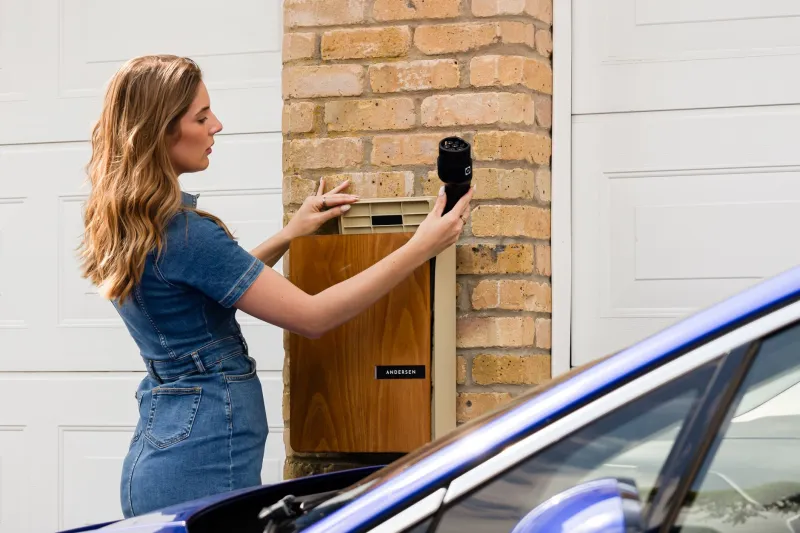
The decision to install a home electric vehicle charger is, by almost any measure, a sound one. It offers convenience, predictable costs, and the satisfaction of waking up each morning to a full battery. Yet a quiet assumption underlies most of these installations: that the charger only uses electricity when the car is actually charging. For a growing number of American homeowners, that assumption is costing real money.
The truth is more nuanced—and more expensive. Your Level 2 charging station is an active electrical device with its own appetite, and it feeds that appetite whether or not your vehicle is in the driveway.
What Standby Power Really Means for a Charger
Every EVSE—Electric Vehicle Supply Equipment, the technical term for what most people call a home charger—contains internal electronics that remain energized whenever the unit is connected to your home's electrical panel. Communication modules, display screens, Wi-Fi radios, ground fault protection circuits, and thermal management systems all draw current continuously.
Depending on the unit's design and features, a Level 2 charger in standby mode typically consumes between 3 and 30 watts at any given moment. That range may sound modest, but consider the math: a unit drawing a conservative 15 watts around the clock accumulates roughly 131 kilowatt-hours per year—electricity that generates no miles, no stored energy, and no direct benefit to the homeowner. At national average residential rates, that translates to approximately $16 to $20 annually just to keep the charger waiting.
For households with multiple EVs and multiple charging stations, those figures compound quickly.
The Conversion Tax You Didn't Know You Were Paying
Beyond standby draw, there is the matter of conversion efficiency. Your home's electrical panel supplies alternating current. Your vehicle's battery stores direct current. The charger's job is to manage that conversion—and no conversion is perfectly efficient.
A well-designed Level 2 charger typically operates at 90 to 95 percent efficiency during active charging. That means for every 100 kilowatt-hours delivered to your vehicle, the charger itself consumes an additional 5 to 10 kilowatt-hours simply in the act of converting and conditioning the power. In a household that charges 300 miles of range per week, those conversion losses alone can add 75 to 150 kilowatt-hours annually to the electric bill—entirely invisible on any dashboard or app.
Lower-cost charging units, particularly some imported models without robust UL certification, can perform considerably worse. Conversion efficiencies below 85 percent are not unheard of in budget hardware, effectively meaning the homeowner pays a significant premium for the privilege of slower, less reliable charging.
Heat as Waste: Thermal Losses in the Charging Cycle
Electricity that doesn't make it into the battery has to go somewhere. In most cases, it becomes heat—radiated from the charger's internal components, from the charging cable, and from the vehicle's own onboard charger module. This thermal dissipation is not merely an inefficiency; in warm climates or enclosed garages, it can create a feedback loop.
A garage that traps heat from charging equipment may force the vehicle's battery management system to expend additional energy on thermal regulation, partially offsetting the efficiency gains of home charging compared to public DC fast charging. Homeowners in southern states, where garage temperatures routinely exceed 90°F in summer months, are particularly susceptible to this dynamic.
Proper ventilation in the charging area is therefore not just a safety consideration—it is an energy efficiency measure with a measurable return.
Smart Charger Features: Convenience That Comes at a Cost
The proliferation of "smart" charging stations has added another layer to this equation. App connectivity, real-time energy monitoring, demand response integration, and scheduled charging windows are genuinely valuable features. They also require active network radios and processors that draw power continuously.
Research from independent testing organizations has found that smart chargers with active Wi-Fi and cellular communication modules can consume two to four times the standby power of simpler, non-networked units. For homeowners who use these features regularly—particularly those enrolled in time-of-use rate schedules or utility demand response programs—the trade-off is often worthwhile. For those who installed a smart charger primarily for its aesthetic appeal and rarely engage the connected features, the calculus is less favorable.
The lesson is not to avoid smart charging infrastructure. It is to use it intentionally.
Practical Steps to Reduce Your Charger's Parasitic Load
The good news is that informed homeowners have several practical options for minimizing the energy overhead of their EV charging setup.
Choose hardware with verified efficiency ratings. When evaluating chargers, look beyond amperage and brand recognition. Units that carry ENERGY STAR certification or that publish third-party efficiency test results give you a meaningful baseline for comparison. A charger that costs $50 more upfront but operates at 94 percent efficiency rather than 87 percent will typically recover that premium within two to three years of average use.
Install a dedicated smart outlet or timer. For homeowners who charge on a predictable overnight schedule, a simple smart outlet or programmable timer installed between the panel circuit and the charger can cut standby consumption by 60 to 80 percent. The charger powers down entirely during hours when it would otherwise sit idle and energized.
Position and ventilate the charging area thoughtfully. Mounting the charger on an exterior wall or in a space with passive airflow reduces thermal buildup, which in turn reduces the vehicle's onboard cooling demands during charging. This is a low-cost installation decision with a long-term efficiency payoff.
Review your charger's connected features periodically. If your unit's app hasn't been opened in six months, consider whether the Wi-Fi radio needs to remain active. Some manufacturers allow users to disable network functionality through the device settings, reducing standby draw without requiring new hardware.
Align charging windows with your utility's rate structure. If you are on a time-of-use rate plan—or if your utility offers one—scheduling charging during off-peak hours dramatically reduces the effective cost per kilowatt-hour, making conversion losses proportionally less expensive.
The Bigger Picture for the Electrifying American Home
Electric vehicles represent one of the most consequential load additions a household can make. A single EV can increase residential electricity consumption by 25 to 40 percent, fundamentally changing how a home interacts with the grid. As more Americans make the transition, the cumulative effect of charger inefficiencies—multiplied across millions of installations—becomes a meaningful factor in grid demand and household budgets alike.
At Pipps Energy, our commitment to powering your world sustainably means looking beyond the headline numbers. The kilowatt-hours that slip through conversion losses and standby circuits are not just a line item on your bill; they represent generation capacity, grid infrastructure, and ultimately emissions that serve no purpose. Helping our customers understand and reduce those losses is part of what we mean when we talk about intelligent electrification.
Your EV charger is a remarkable piece of infrastructure. With a few deliberate choices, it can be a remarkably efficient one as well.