Too Much of a Good Thing: When Rooftop Solar Overwhelms the Lines That Were Never Built for It
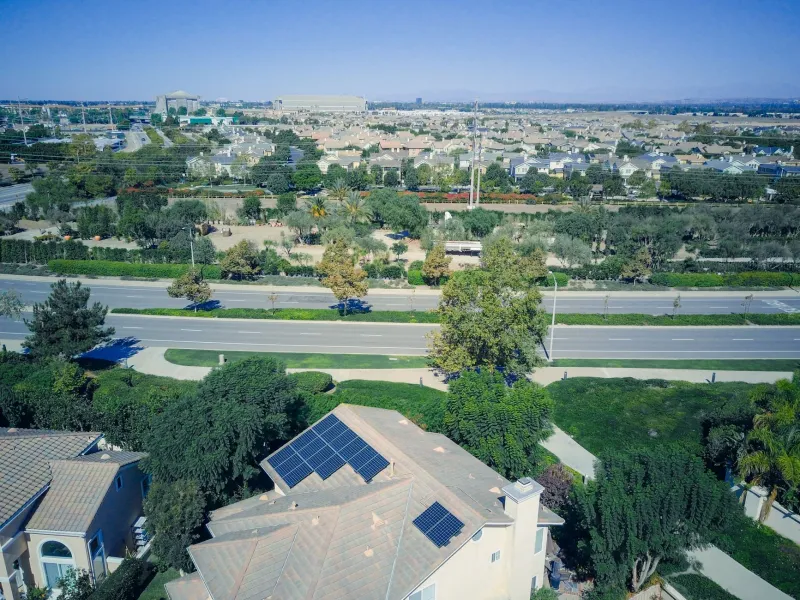
For most of the twentieth century, electricity moved in a single, predictable direction: from large centralized power plants, through high-voltage transmission lines, down through substations, and finally along neighborhood feeder lines to homes. Every component of that system — the transformers, the conductors, the protective relays — was sized and calibrated for that one-way flow. Then rooftop solar arrived, and the entire logic of the grid began to reverse.
The benefits of distributed solar generation are well documented. Homeowners reduce their utility bills, carbon emissions decline, and local energy production can ease demand on the broader transmission network during peak hours. Yet a less-discussed challenge has emerged in neighborhoods where solar adoption reaches a critical density: the feeder lines and distribution equipment that serve those streets were simply never designed to absorb power flowing back upstream. Understanding this constraint is increasingly important for any homeowner considering a rooftop installation.
How Distribution Infrastructure Was Originally Engineered
A typical residential feeder line — the set of wires running along the utility poles or buried beneath the street in your neighborhood — is rated to carry a specific maximum load. Engineers calculated that load based on the expected consumption of the homes it would serve, factoring in appliances, HVAC systems, lighting, and a reasonable growth margin. Voltage regulation equipment along the feeder was installed to ensure that power flowing outward from the substation arrived at each home within an acceptable voltage band.
Bidirectional power flow disrupts that carefully balanced equation. When dozens of homes on the same feeder are simultaneously exporting solar energy back toward the substation — typically during midday hours when generation peaks and household consumption is relatively low — voltage at the far end of the feeder can rise above safe operating thresholds. Protective equipment that was designed to prevent overvoltage may trip, temporarily disconnecting portions of the line. In some cases, the cumulative reverse current exceeds the thermal rating of transformers, accelerating their degradation.
Real Neighborhoods, Real Limits
This is not a theoretical concern. In California, Hawaii, and parts of the Southwest where residential solar penetration is highest, utilities have documented feeder circuits where interconnection queues have effectively been closed. Homeowners in these areas who apply for permission to connect a new rooftop system are informed that the local circuit cannot accommodate additional generation without infrastructure upgrades — upgrades that can cost hundreds of thousands of dollars per feeder and that utilities must weigh against their broader capital budgets.
Hawaii Electric faced this challenge earlier than most, given the state's aggressive solar adoption rates. In certain Oahu neighborhoods, solar saturation on individual feeders reached levels where the utility implemented hosting capacity maps — publicly available tools showing which circuits could accept new interconnections and which had reached their limits. Several other states, including California and New York, have since adopted similar transparency measures, allowing homeowners and installers to check circuit availability before committing to a purchase.
In the Midwest and Southeast, where solar adoption is growing but has not yet reached the saturation levels seen on the coasts, utilities are beginning to encounter early-stage versions of the same problem. Distribution engineers who once reviewed solar interconnection applications as a formality are increasingly required to conduct detailed power flow studies before approving new systems.
The Cost Question Nobody Discusses at the Point of Sale
When a homeowner receives a solar proposal from an installer, the financial projections typically include equipment costs, available federal tax credits, net metering compensation, and an estimated payback period. What those proposals rarely address is the possibility that the local feeder serving the home may be approaching its hosting capacity — or that the utility may require costly upgrades as a condition of interconnection approval.
In most states, when a utility determines that grid upgrades are necessary to accommodate a new solar installation, the costs are allocated either to the applicant, spread across ratepayers, or shared through some combination of both. The specific rules vary by state and by utility, but homeowners can find themselves facing unexpected charges — sometimes running into several thousand dollars — that were not included in the original cost estimate.
This is not an argument against rooftop solar investment. It is, however, a reason to conduct due diligence before signing a contract. Checking your utility's hosting capacity map, if one is available, takes only a few minutes and can reveal whether your address sits on a feeder with ample remaining capacity or one that is approaching its operational ceiling.
What Utilities Are Doing — and What They Are Not
Utilities across the country are investing in distribution grid modernization, though the pace and scale of that investment vary considerably. Advanced inverter technology — now required for new solar installations in many jurisdictions — allows rooftop systems to actively regulate voltage and reactive power, reducing some of the stress that distributed generation places on feeder lines. Smart grid sensors and automated switching equipment give operators better real-time visibility into distribution circuit conditions.
More substantial solutions, such as reconductoring feeder lines with higher-capacity cables, installing additional distribution transformers, or deploying grid-scale battery storage at substations to absorb excess midday solar generation, require significant capital expenditure. Utilities must balance these investments against other infrastructure priorities, and the regulatory process for recovering those costs through customer rates is often slow.
Some utilities have explored dynamic pricing structures and time-of-export incentives designed to shift solar generation behavior — encouraging homeowners with battery storage to retain their midday solar output rather than exporting it immediately. These approaches can defer the need for physical infrastructure upgrades, but they depend on widespread adoption of home battery systems, which remain a significant additional expense for most households.
What Homeowners Should Know Before Investing
For any household weighing a rooftop solar installation, several practical steps can reduce the risk of unpleasant surprises during the interconnection process.
First, request your utility's hosting capacity map or feeder availability data. Many utilities are now required by state regulators to publish this information, and it can be accessed through the utility's website or by contacting the interconnection department directly.
Second, ask your installer to confirm that they have reviewed the interconnection requirements for your specific address — not just your general area. A reputable installer will obtain this information as a standard part of the site assessment.
Third, understand your state's rules regarding upgrade cost allocation. Your state public utility commission's website is often the most reliable source for this information, and some states have consumer advocacy offices that can assist with specific questions.
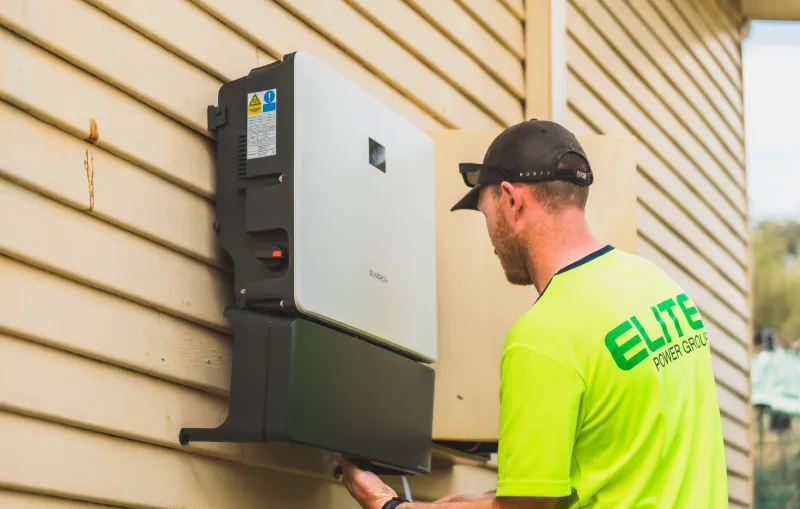
Finally, if your feeder is at or near capacity, explore whether a home battery system changes the calculus. In some jurisdictions, pairing storage with solar can allow a system to be approved even on a constrained circuit, because the battery limits the amount of power exported to the grid at any given moment.
The Broader Implication for the Energy Transition
The interconnection bottleneck affecting residential solar is, in many respects, a symptom of a broader structural reality: the distribution grid was built for a different era, and the pace of technology adoption has outrun the pace of infrastructure modernization. Solving this challenge will require coordinated investment from utilities, supportive regulatory frameworks, and informed decision-making by homeowners.
At Pipps Energy, we believe that expanding access to clean, distributed generation is an essential component of a sustainable energy future. Achieving that future requires honest engagement with the technical and logistical barriers that stand between today's grid and tomorrow's. Understanding the limits of neighborhood infrastructure is not a reason to abandon rooftop solar — it is a reason to approach it with the same rigor and diligence that any significant home investment deserves.