Green on the Surface: How to Look Past Utility Sustainability Claims and Find Out What's Actually Powering Your Home
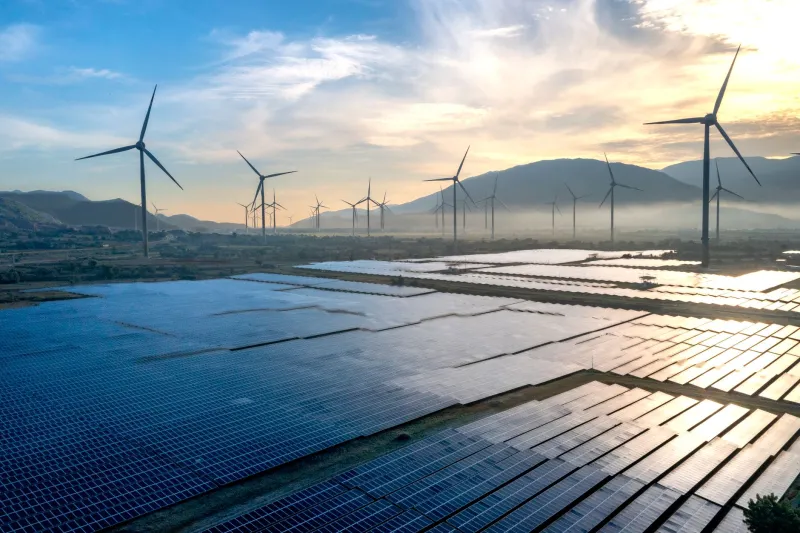
The annual sustainability report arrives with polished photography of wind turbines and solar arrays. The utility's homepage features a prominent pledge to reach net-zero emissions by a date that sounds reassuringly near. The green energy add-on program is marketed prominently on your billing statement. For the average residential customer, it can be genuinely difficult to reconcile these signals with a more fundamental question: what fuel source actually generated the electrons that ran your dishwasher this morning?
The honest answer is almost certainly more complicated—and more fossil-fuel-dependent—than the marketing suggests. This is not a matter of utilities being uniquely deceptive. It reflects the genuine complexity of how electricity is generated, traded, and delivered across interconnected regional grids. But complexity is not the same as transparency, and customers deserve a clearer picture of what they are actually buying.
The Gap Between Commitment and Current Reality
Nearly every major investor-owned utility in the United States has published a long-term decarbonization commitment. These pledges typically promise significant reductions in carbon emissions by 2030, 2040, or 2050, anchored by planned retirements of coal and gas generation and corresponding investments in wind, solar, and storage capacity.
The critical word in that sentence is planned. Commitments made today about generation assets that will be built or retired fifteen years from now carry inherent uncertainty. Regulatory approvals, financing conditions, technology costs, and political environments can all shift substantially over that timeframe. Several utilities that made prominent 100 percent clean energy pledges in the 2010s have since quietly revised their timelines or redefined the terms of their commitments.
Meanwhile, the current generation mix that most utilities rely upon to meet daily residential demand remains heavily weighted toward natural gas, which functions as the primary balancing resource on most regional grids. Coal, while declining, still contributes a meaningful share of baseload generation in parts of the Midwest and Southeast. The renewable capacity that utilities highlight in their marketing often represents a fraction of total system output, particularly during evening hours when solar generation is unavailable and demand remains elevated.
Understanding Renewable Energy Certificates and Why They Matter
One of the most important—and least understood—mechanisms in utility sustainability marketing is the Renewable Energy Certificate, or REC. A REC is a tradeable instrument representing the environmental attributes of one megawatt-hour of electricity generated from a qualifying renewable source. When a utility or a customer purchases a REC, they are claiming the right to say that a megawatt-hour of renewable energy was produced on their behalf.
The complication is that RECs can be bought and sold separately from the actual electricity they represent. A utility in Ohio can purchase RECs generated by a wind farm in Texas without any of that wind-generated electricity physically flowing to Ohio customers. The electrons that actually reach Ohio homes may come primarily from natural gas plants. The utility, however, can legitimately claim in its marketing materials that a portion of its energy supply is backed by renewable generation—because the certificates say so.
This is not illegal, and RECs serve a real purpose in financing renewable development. But it does mean that a utility's marketed renewable percentage and the actual carbon intensity of the electricity it delivers to residential meters can be substantially different figures. Customers who assume that a utility's green energy claims reflect what is physically flowing through their service connection may be operating on an incomplete understanding.
How to Audit Your Actual Energy Sources
Fortunately, several publicly available tools allow customers to investigate the real generation mix behind their electricity supply.
Start with the EPA's Power Profiler. The Environmental Protection Agency maintains a free online tool at epa.gov that allows customers to enter their zip code and view the average generation mix for their regional electricity grid, broken down by fuel type. This provides a baseline for understanding the carbon intensity of the power you actually receive, independent of your utility's marketing claims.
Review your utility's Integrated Resource Plan. State-regulated utilities are required to file Integrated Resource Plans (IRPs) with their public utility commissions. These documents outline the utility's projected generation portfolio over a multi-year planning horizon, including planned retirements and new capacity additions. IRPs are public records and are typically available on the utility commission's website. They offer a far more granular and legally accountable picture of a utility's trajectory than sustainability marketing materials.
Examine the annual emissions disclosure. Under EPA reporting requirements, large generators must disclose actual emissions data annually. This information is compiled in the EPA's Emissions & Generation Resource Integrated Database (eGRID), which provides facility-level data on generation output and emissions by fuel type. Matching your utility's generation assets against eGRID data reveals the actual carbon intensity of its owned generation fleet.
Scrutinize green energy program terms carefully. If your utility offers a voluntary green energy program—where customers pay a premium for renewable-backed power—request documentation of how the program is structured. Specifically, ask whether it uses RECs sourced locally or from distant markets, and whether the renewable generation is additive (meaning it would not have been built without the program's revenue) or simply redirected from existing capacity.
What Genuine Transparency Looks Like
Some utilities are moving toward more substantive disclosure practices. A growing number now publish real-time or near-real-time generation mix data, allowing customers to see what fuels are powering the grid at any given hour. Community choice aggregation programs, available in several states, allow municipalities to procure power directly and often with greater transparency about sourcing than investor-owned utilities provide.
Customers can accelerate this shift by asking pointed questions through formal channels. State public utility commission proceedings, utility shareholder meetings, and direct correspondence to customer service departments all create documented records of customer demand for transparency. Regulators in several states have responded to organized customer pressure by requiring more granular disclosure in utility marketing materials.
Taking Control of Your Own Energy Story
For customers who want to move beyond reliance on utility claims entirely, the most direct path is on-site generation. A rooftop solar installation paired with battery storage means that a meaningful share of your household's electricity comes from a source you can observe and verify directly. The economics of this approach have improved substantially, and federal tax incentives currently in place make the investment more accessible than at any prior point.
None of this requires cynicism about utility sustainability commitments. Many are sincere, and the transition to cleaner generation is genuinely underway across most of the United States. But sincerity and current reality are different things. At Pipps Energy, we believe that informed customers are the most effective force for accelerating that transition—and that starts with understanding the difference between what utilities promise and what they presently deliver.