Phantom Power, Real Money: The Billion-Dollar Drain Utilities Quietly Ignore
Plug a device into a wall outlet and then turn it off. In most American homes, that device is still drawing power. Not much, perhaps—a watt here, three watts there—but it never stops. Multiply that quiet consumption across every television, game console, microwave, printer, and phone charger in a typical household, and you arrive at a figure that surprises most people: the Lawrence Berkeley National Laboratory has estimated that standby power accounts for roughly 10 percent of residential electricity use in the United States. Across the entire country, that translates to tens of billions of dollars spent annually on electricity that delivers no meaningful service to anyone.
The phenomenon has been called phantom power, vampire load, and standby consumption. By any name, it represents one of the most persistent and underaddressed inefficiencies in American energy use. What makes it particularly notable is not merely its scale, but the fact that utilities—the companies with the most comprehensive view of household consumption—have shown limited urgency in helping customers eliminate it.
The Aggregate Picture Is Staggering
When researchers attempt to quantify phantom power at a national level, the numbers quickly become difficult to conceptualize. The U.S. Energy Information Administration estimates that the residential sector consumes approximately 1.4 trillion kilowatt-hours per year. If standby losses account for even 8 percent of that total, the resulting waste exceeds 112 billion kilowatt-hours annually. At an average national retail rate of approximately 16 cents per kilowatt-hour, that figure represents roughly $18 billion in electricity charges paid by American households for power that accomplishes nothing.
For individual consumers, the impact is more tangible. Studies suggest the average household loses between $100 and $200 per year to phantom loads, depending on the number and age of connected devices. Older electronics tend to be far worse offenders than modern, efficiency-rated equipment, which means homes with a mix of newer and legacy appliances often sit at the higher end of that range without realizing it.
Why Utilities Have Little Incentive to Help
The question of why utilities have not mounted more aggressive campaigns to eliminate phantom power is, at its core, a question about business structure. In most states, electric utilities operate as regulated monopolies. They earn revenue by selling electricity. While rate structures and regulatory frameworks vary considerably across the country, the fundamental dynamic is consistent: less electricity consumed generally means less revenue collected.
This does not mean utilities are indifferent to efficiency. Many operate demand-side management programs, often because regulators require them to. Rebate programs for ENERGY STAR appliances, smart thermostat incentives, and home energy audits exist in many service territories. But these programs tend to concentrate on high-visibility, high-impact measures—HVAC upgrades, insulation improvements, lighting conversions—where the savings are substantial enough to satisfy regulatory mandates without cutting too deeply into overall consumption volumes.
Phantom power, by contrast, is granular. It is distributed across dozens of devices, each drawing a modest amount. Addressing it requires behavioral change and product replacement at a level of specificity that is difficult to incentivize through a simple rebate. The return on investment for a utility launching a phantom-load awareness campaign is unclear, and the savings, while meaningful in aggregate, are diffuse enough that they rarely move the needle on a utility's efficiency program metrics.
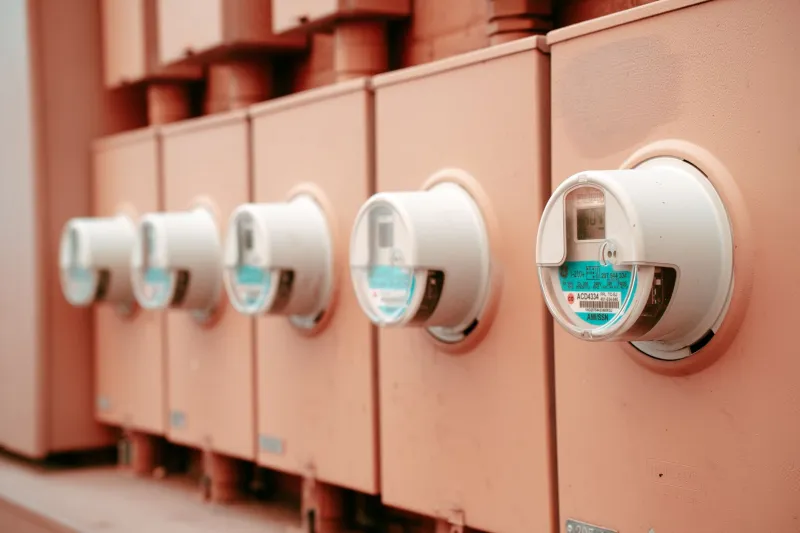
There is also the matter of data. Smart meters, now deployed in the majority of American homes, provide utilities with consumption data at intervals as short as fifteen minutes. In principle, this data could be used to identify households with unusually high standby consumption signatures—patterns that suggest an abundance of always-on devices. In practice, most utilities use this data primarily for billing and grid management, not for delivering actionable efficiency guidance to individual customers.
The Technology That Could Change the Equation
Several emerging technologies are beginning to shift the calculus around phantom power, often without utility involvement.
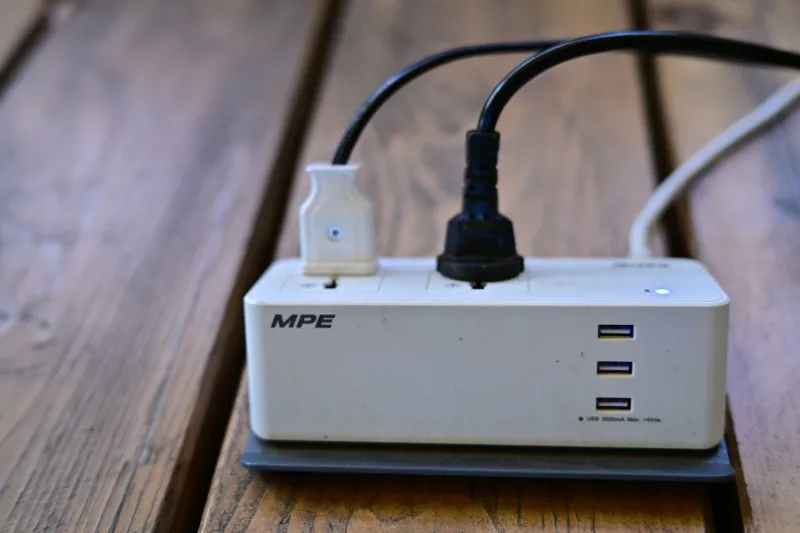
Smart power strips have been available for years, but newer versions with energy monitoring capabilities allow households to see, in real time, exactly how much each connected device is drawing. This visibility alone tends to prompt behavioral change; consumers who can see a standby number on an app are more likely to act on it than those who simply read about the issue in general terms.
Whole-home energy monitoring systems, which attach to the main electrical panel and use machine learning to disaggregate consumption by device type, represent a more sophisticated approach. Products in this category can identify individual appliances based on their electrical signatures and flag those with unusually high standby draws. As these systems become more affordable, they are reaching a broader segment of the market.
Some utilities have begun integrating energy disaggregation technology into their customer-facing portals, offering subscribers a breakdown of estimated consumption by category. While the accuracy of these estimates varies, they represent a meaningful step toward giving customers the information they need to make targeted efficiency decisions.
What Households Can Do Right Now
Waiting for utilities to lead on phantom power is likely to be an extended exercise in patience. The more effective approach is to treat this as a household infrastructure problem with a defined solution set.
Begin with an audit. Walk through your home and catalog every device that remains plugged in when not in active use. Pay particular attention to entertainment systems, home office equipment, kitchen appliances with digital displays, and battery chargers. These categories account for a disproportionate share of standby consumption in most homes.
Invest in smart plugs with energy monitoring for devices you are not ready to replace. These allow you to schedule power cutoffs during overnight hours or periods when you are away from home, eliminating standby draw without requiring you to manually unplug equipment.
When replacing appliances or electronics, prioritize ENERGY STAR certification and look specifically at the standby power rating, which manufacturers are required to disclose. The difference between a legacy device drawing 15 watts on standby and a modern equivalent drawing less than half a watt is significant when that device operates around the clock for years.
A Structural Problem Requiring Structural Attention
Phantom power is not a new discovery. Researchers identified it as a significant source of residential waste decades ago, and efficiency advocates have periodically raised alarms about its cumulative impact. What has changed is the context: with electricity rates rising in most parts of the country and grid reliability increasingly strained by extreme weather and growing demand, the case for eliminating unnecessary consumption is stronger than it has ever been.
The billions of dollars lost annually to phantom power represent a genuine inefficiency in the American energy system—one that benefits no one in the long run, including utilities, which must build and maintain generation and transmission capacity to serve loads that exist only because devices never truly power down. Addressing it requires a combination of better consumer tools, stronger regulatory incentives for utility engagement, and a shift in how households think about the relationship between their devices and the grid.
At Pipps Energy, we believe that informed customers are more capable of managing their energy costs than any program designed on their behalf. Understanding phantom power is the first step toward doing something about it.