When the Lights Go Out, the Costs Stay On: The Hidden Financial Burden of Grid Unreliability
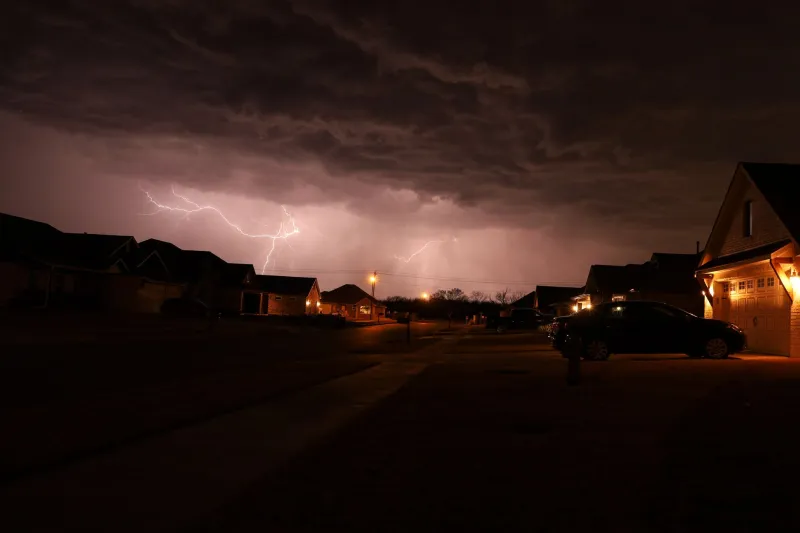
A power outage is easy to underestimate when it lasts only a few hours. The inconvenience is real but manageable—some candles, a flashlight, perhaps a meal that gets rescheduled. When the same outage extends into a second day, the accounting changes. The refrigerator full of groceries becomes a liability. The home office becomes inoperable. The medical equipment that requires continuous power becomes a crisis. The repair technician who discovers that the voltage surge preceding the outage damaged the HVAC control board becomes an unexpected and substantial expense.
American households collectively experience these costs millions of times each year, and yet the financial impact is almost entirely invisible in the way the energy sector measures and discusses reliability. Utilities track outage frequency and duration through standard metrics. Regulators review those metrics and sometimes impose penalties for poor performance. But the downstream economic harm absorbed by households—the spoiled food, the damaged electronics, the lost wages, the emergency hotel stays—appears in no utility balance sheet. It is externalized entirely onto the customers the grid is meant to serve.
Putting Numbers to an Invisible Problem
The aggregate cost of power outages to the American economy is substantial and has been studied with increasing rigor in recent years. The Department of Energy has cited estimates suggesting that power interruptions cost the U.S. economy between $150 billion and $200 billion annually, a figure that encompasses residential, commercial, and industrial losses. Even taking the lower bound of that range, the number dwarfs the annual capital investment utilities make in grid infrastructure.
For individual households, the costs are more modest in absolute terms but proportionally significant. Research from various consumer and academic sources suggests that a single extended outage—defined as one lasting more than four hours—can impose direct costs of $150 to $500 on a typical household. That range includes food spoilage, which the USDA estimates can reach $200 to $400 for a fully stocked refrigerator and freezer, plus incidental expenses such as dining out, purchasing ice, or paying for temporary lodging.
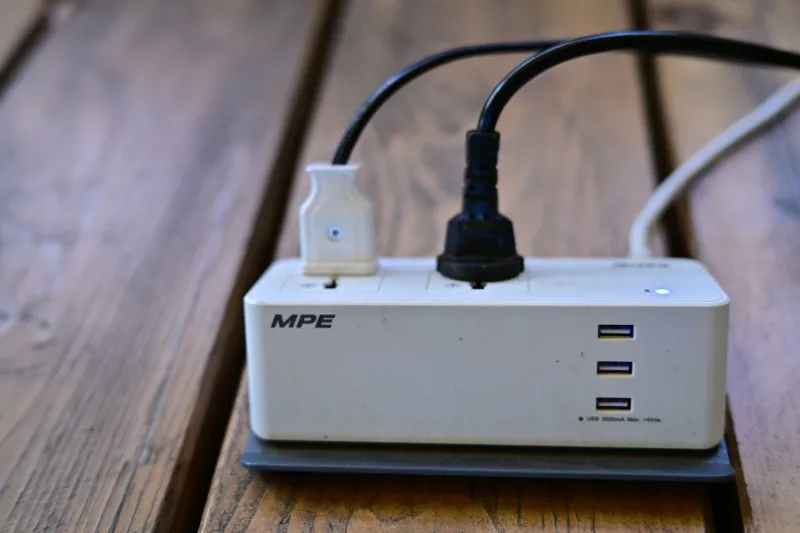
Electronic equipment damage from voltage irregularities associated with outage events—surges at restoration, browndowns preceding full interruption—adds another layer of cost that is harder to quantify but frequently significant. Consumer electronics, smart home systems, and appliances with sophisticated control boards are all vulnerable. Surge protection mitigates but does not eliminate this risk, and many households lack adequate protection for all connected equipment.
Lost productivity represents perhaps the largest and most diffuse category of outage cost for households. The expansion of remote work has made residential power reliability a professional necessity for a substantial portion of the American workforce. An outage that would once have been an inconvenience is now, for many workers, equivalent to being locked out of the office—with consequences that range from missed deadlines to lost billable hours to disciplinary action.
How Reliability Costs Flow Through Your Bill
The relationship between grid reliability and electricity rates is one of the less-discussed aspects of utility economics, and it operates in ways that are not immediately intuitive.
Utilities invest in infrastructure—transmission lines, substation equipment, distribution upgrades, vegetation management, storm hardening—to maintain reliability. These capital expenditures are recovered through rates over time, meaning that customers pay for reliability investments regardless of whether those investments succeed in preventing the outages they were designed to address. When a utility installs automated switching equipment that reduces outage duration by 20 percent, the cost of that equipment appears in customer bills. When a storm knocks out power for three days despite that equipment, the customer pays both the rate-embedded cost of the infrastructure and the direct cost of the outage itself.
This structure creates what might be called a reliability double charge. Customers fund the utility's reliability programs through their rates, and they also bear the uncompensated financial consequences when the grid fails. The utility, by contrast, recovers its infrastructure costs regardless of outcomes and faces financial exposure only through regulatory penalties, which are typically modest relative to the scale of customer harm.
In some jurisdictions, regulators have established performance-based mechanisms that link utility earnings to reliability outcomes, creating stronger financial incentives for sustained investment. These frameworks represent a meaningful improvement over pure cost-of-service regulation, but they remain far from universal, and the penalties imposed for poor performance rarely approach the magnitude of customer losses.
The Uneven Distribution of Outage Risk
Power outages do not affect all households equally, and the distribution of outage risk maps closely onto existing socioeconomic disparities. Older distribution infrastructure tends to be concentrated in lower-income and rural areas, where investment has historically lagged. Residents in these areas experience both higher outage frequency and longer restoration times.
For households with limited financial reserves, the impact of an extended outage is disproportionately severe. A family without savings cannot easily absorb a $300 grocery replacement expense. A renter in an older apartment building cannot install a whole-home generator. A household dependent on electrically powered medical equipment—oxygen concentrators, home dialysis machines, refrigerated medications—faces risks that go beyond financial inconvenience.
The households most vulnerable to outage costs are also, in most cases, the least able to invest in the protective technologies—backup power systems, battery storage, surge protection, smart monitoring—that would reduce their exposure. This creates a reliability equity gap that is rarely acknowledged in utility rate proceedings or infrastructure investment plans.
Protective Measures Within Consumer Reach
While systemic change requires regulatory and utility action, there are practical steps households can take to reduce their financial exposure to outage events.
Quality surge protectors with joule ratings appropriate to the equipment they protect are a basic and relatively inexpensive first line of defense. Whole-home surge protection, installed at the main electrical panel, provides broader coverage and is increasingly available at accessible price points.
For households in areas with frequent outages, a modest battery backup system can maintain power to critical circuits—refrigeration, lighting, medical equipment, communications—for the duration of most residential outages. As battery storage costs have declined, these systems have moved within reach of a broader range of households, particularly when paired with utility incentive programs where available.
Maintaining a documented inventory of appliances and electronics, with purchase prices and current replacement values, streamlines the process of filing homeowner's or renter's insurance claims following outage-related damage. Many consumers do not realize that insurance policies may cover certain outage losses, including food spoilage, under specific conditions.
Toward a More Honest Accounting
The financial cost of grid unreliability is real, measurable, and currently distributed in ways that favor utilities over the customers they serve. Addressing this imbalance requires both stronger regulatory frameworks that hold utilities financially accountable for reliability outcomes and greater transparency in how infrastructure investment decisions are made and communicated.
It also requires a shift in how households think about outage risk—not as an occasional inconvenience to be endured, but as a recurring financial exposure that warrants deliberate preparation. The grid that serves American homes was built for a different era, and the gap between its capabilities and the demands placed upon it is widening. Understanding the true cost of that gap is the first step toward demanding something better.
At Pipps Energy, reliability is not a marketing term—it is an obligation. We are committed to transparency about the real costs of grid performance and to supporting customers in building resilience against the consequences of an energy system that is still catching up to the challenges of the twenty-first century.