Retired, Not Obsolete: How Used EV Batteries Are Becoming the Grid's Next Great Resource
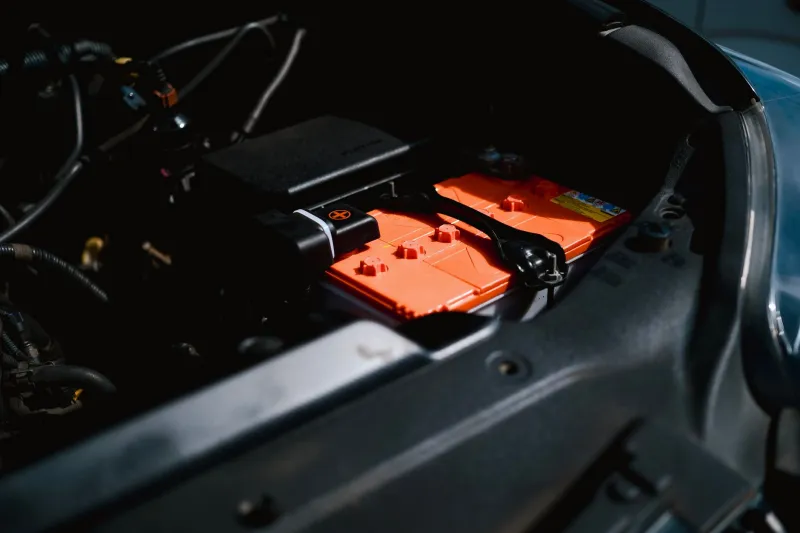
An electric vehicle battery is considered end-of-life for automotive purposes once it degrades to roughly 70 to 80 percent of its original capacity. At that threshold, the range penalty becomes noticeable enough to frustrate drivers—but the remaining storage capability is far from worthless. In fact, what automakers and consumers discard as insufficient for the road may be precisely what the modern grid needs.
Across the United States, a nascent but rapidly maturing industry is emerging around so-called second-life battery systems. These repurposed units, pulled from retired EVs and reconfigured into stationary storage arrays, are finding new purpose in homes, commercial facilities, and utility-scale installations. For an energy sector grappling with the intermittency of solar and wind generation, the timing could hardly be more opportune.
The Scale of What's Coming
To appreciate the potential here, consider the volume of EV batteries that will cycle out of vehicles over the next decade. Analysts at BloombergNEF and other research organizations have projected that hundreds of gigawatt-hours' worth of lithium-ion capacity will retire from passenger vehicles in the US alone by the early 2030s. That figure will only grow as the current wave of EV adoption matures.
Historically, the default path for these batteries has been recycling—breaking them down to recover lithium, cobalt, nickel, and manganese. Recycling remains important and will continue to play a role. But it is an energy-intensive process, and it destroys value that could otherwise be preserved. Redeployment extends the useful life of a battery by an estimated seven to ten additional years, capturing that embedded value before the materials are ultimately reclaimed.
For utilities managing increasingly complex grids, that extended lifespan translates directly into a distributed storage resource they did not have to manufacture from scratch.
How Repurposing Actually Works
The technical pathway from automotive pack to grid-ready storage unit is more involved than simply plugging a used battery into a wall. EV batteries are designed as integrated modules within a vehicle's architecture. Extracting them, testing individual cells for remaining capacity, sorting and matching modules, and repackaging them into standardized stationary enclosures requires skilled labor, specialized diagnostics, and robust battery management software.
Several companies—including partnerships between major automakers and independent energy storage firms—have developed streamlined processes to manage this reconditioning at scale. Nissan, for example, has operated second-life programs using retired Leaf batteries for years, with installations supporting everything from commercial backup power to stadium energy management in Japan and Europe. Domestic equivalents are advancing, with US-based startups and utility pilot programs accelerating the learning curve.
The battery management systems used in second-life applications must compensate for the fact that cells within a repurposed pack will not be perfectly uniform. Advanced software monitors each module's state of charge, temperature, and degradation rate in real time, ensuring the system operates safely and efficiently even as individual cells age at slightly different rates.
What This Means for Neighborhoods and Homeowners
The most immediate opportunity for residential customers lies in neighborhood-scale microgrids and community energy storage programs. A microgrid is essentially a locally controlled segment of the electrical network capable of operating independently from the broader utility grid when necessary. Equipping such a system with second-life battery storage dramatically improves its resilience and its ability to absorb surplus solar generation from rooftop panels.
From a cost perspective, second-life batteries carry a significant price advantage over newly manufactured units. Because the cells have already been paid for once—embedded in the original vehicle purchase—the economics of repurposing can yield storage capacity at a fraction of what new lithium-ion installations command. Estimates suggest second-life systems can be deployed at 30 to 50 percent lower cost per kilowatt-hour compared to new battery storage, depending on the source packs and the complexity of reconditioning.
For homeowners who participate in utility-sponsored community storage programs, this cost differential can translate into tangible financial incentives. Some utilities are beginning to compensate customers who allow shared storage assets—including second-life systems—to be installed on or near their properties and dispatched as part of demand response or grid balancing operations. The arrangement mirrors the logic of rooftop solar net metering, but applied to storage rather than generation.
Grid Stability and the Renewable Integration Problem
The deeper significance of second-life battery deployment becomes clear when viewed through the lens of renewable energy integration. Solar and wind generation are variable by nature—output rises and falls with weather conditions, time of day, and season. Utilities must continuously balance supply and demand across the grid, and as renewable penetration increases, that balancing act grows more demanding.
Distributed storage—batteries spread across neighborhoods, commercial sites, and substations—provides a flexible tool for absorbing excess generation during peak production periods and releasing it when demand outpaces supply. Second-life batteries, precisely because they are available in large and growing volumes at lower cost, could accelerate the deployment of this distributed storage layer faster than new battery production alone could achieve.
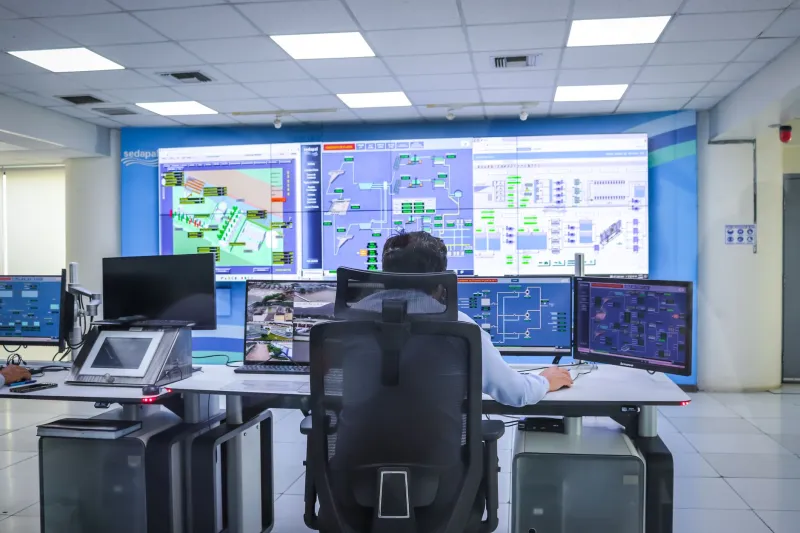
Utilities in California, New York, and several other states with aggressive renewable portfolio standards are already exploring second-life storage as a component of their grid modernization strategies. Pilot programs are testing how aggregated neighborhood-scale storage can be coordinated through virtual power plant software, enabling utilities to dispatch stored energy from dozens of small installations as if they were a single, centralized resource.
The Challenges That Remain
It would be misleading to suggest that second-life battery storage is without complications. Standardization remains a significant obstacle. EV batteries vary considerably in chemistry, form factor, voltage, and thermal management design across manufacturers and model years. Building a reconditioning pipeline capable of handling this diversity efficiently requires investment in flexible tooling and sophisticated diagnostic systems.
Safety is another dimension that demands careful attention. Lithium-ion batteries carry inherent risks related to thermal events if damaged cells are not identified and isolated during the sorting process. Rigorous testing protocols and robust battery management software are essential safeguards, and regulatory frameworks governing stationary storage installations are still catching up to the pace of deployment.
Liability questions also linger. When a repurposed battery is deployed in a residential or community setting, questions of warranty, performance guarantees, and responsibility in the event of a failure require clear contractual frameworks among manufacturers, reconditioning firms, utilities, and end users.
None of these challenges are insurmountable. The industry is addressing them methodically, and as deployment volumes grow, the economics will drive further refinement of processes and standards.
A Resource Too Valuable to Waste
The energy transition demands creativity not only in how power is generated, but in how every asset within the system is utilized. An EV battery that has faithfully served a driver for a decade carries within it years of additional value—value that can support cleaner, more resilient energy delivery for entire communities.
As second-life storage matures from pilot programs into mainstream deployment, utilities, homeowners, and policymakers alike would do well to treat retired EV batteries not as waste to be managed, but as a resource to be strategically deployed. The grid of the future will be built partly from the components of the vehicles we drove today—and that is a remarkably efficient way to power tomorrow.