Forecasting in the Dark: How Utility Demand Predictions Keep Missing the Mark—And Who Pays the Price
The Promise and the Problem
Every year, utility planners across the United States sit down with spreadsheets, historical consumption data, and population projections to answer a deceptively simple question: how much electricity will customers need? The answer shapes decisions worth billions of dollars—new transmission lines, substation upgrades, peaker plant contracts, and reserve capacity agreements. Get it right, and the grid hums along efficiently. Get it wrong, and ratepayers absorb the consequences for decades.
For most of the twentieth century, those forecasts were reasonably reliable. Demand grew in fairly predictable lockstep with population and economic output. Utilities could plan infrastructure with a comfortable degree of confidence. That era, however, is over.
The American energy landscape has been fundamentally restructured in a remarkably short span of time. Distributed rooftop solar now offsets daytime demand in ways that vary neighborhood by neighborhood. Electric vehicles have introduced large, unpredictable charging loads that can materialize rapidly when a new model launches or a federal incentive expires. Remote work has redistributed consumption from commercial buildings to residential neighborhoods, flattening the classic morning and evening peaks that utilities spent generations learning to anticipate. The models built to serve the old world are increasingly ill-equipped for the new one.
The Anatomy of a Forecast Failure
To understand why this matters, consider how utilities actually use their demand forecasts. Long-range projections—typically spanning ten to twenty years—drive capital investment decisions. If a utility projects that peak demand will grow by fifteen percent over the next decade, it will commit to infrastructure expansions accordingly. Those investments are then recovered through rate cases, meaning customers pay for them whether or not the projected demand ever materializes.
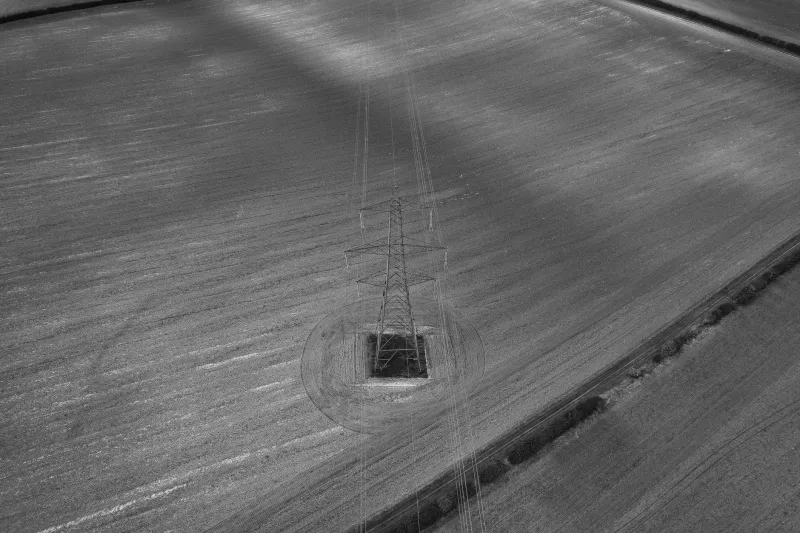
That last point is critical. When utilities overbuild in response to inflated forecasts, the stranded costs do not simply disappear. Regulators generally allow utilities to recover prudent investments through rates, so customers effectively pay for infrastructure that sits largely idle most of the year. A transmission line engineered to handle peak loads that never arrive still carries a price tag that appears on monthly bills.
The phenomenon is not hypothetical. Across multiple regions, utilities have constructed or contracted for generation capacity based on peak demand projections that distributed solar and efficiency improvements subsequently eroded. In some cases, plants designed to run during summer afternoons now operate only a handful of hours annually, yet their fixed costs remain embedded in the rate structure.
Underestimation carries its own hazards. A utility that fails to anticipate the surge in EV adoption within a particular distribution circuit may find transformers and feeder lines pushed beyond their rated capacity, accelerating equipment degradation and increasing the risk of outages. Neither error is benign.
The Variables That Broke the Old Models
Three forces, more than any others, have destabilized traditional forecasting frameworks.
Distributed solar generation has introduced what analysts sometimes call the duck curve problem at a granular level. On a sunny spring afternoon, a neighborhood blanketed with rooftop panels may draw almost nothing from the grid. The same neighborhood on a cloudy day in the same season may look entirely conventional. Aggregated across a service territory, these variations create demand signatures that historical regression models struggle to interpret accurately.
Electric vehicles add a layer of complexity that extends beyond sheer load growth. The timing, duration, and location of charging sessions are highly sensitive to driver behavior, electricity pricing signals, and software defaults set by vehicle manufacturers. A utility may correctly project that fifty thousand EVs will be registered in its territory by a given year while still misjudging when and where those vehicles will draw power—a distinction that matters enormously for distribution system planning.
Remote work and shifting commercial occupancy have altered the temporal shape of demand in ways that aggregate data masks. Office buildings that once anchored midday commercial load are partially vacated. Residential consumption has risen during hours that once belonged to commercial and industrial customers. The net effect on total kilowatt-hours may appear modest, but the redistribution across circuits, substations, and time-of-day periods creates planning challenges that aggregate forecasts simply do not capture.
What Inaccurate Forecasting Actually Costs
The financial consequences of systematic forecast error are distributed unevenly, but they are rarely invisible. Overbuilt transmission infrastructure contributes to the fixed-charge component of utility rates, which customers pay regardless of how much electricity they consume. In regions where regulators have approved large capital programs based on demand projections that did not materialize, the rate impact has been measurable and persistent.
There is also an opportunity cost dimension. Capital committed to infrastructure that ultimately operates below its designed utilization rate is capital unavailable for investments that might deliver greater value—grid modernization, advanced metering, or demand flexibility programs that could reduce peak loads more cost-effectively than new physical infrastructure.
Grid reliability enters the equation as well. A utility that underestimates demand growth in a fast-developing corridor may defer necessary upgrades until equipment stress becomes acute, increasing the probability of localized failures. The 2021 winter storm events in Texas offered a stark reminder of what happens when planning assumptions diverge too far from operational reality, though in that case the failure involved supply-side assumptions as much as demand projections.
AI and the Next Generation of Demand Intelligence
The forecasting community has not been static in the face of these challenges. A growing number of utilities and grid operators are piloting machine learning models that ingest data sources far richer than the historical consumption records that anchored earlier approaches.
Advanced prediction platforms now draw on satellite imagery to estimate rooftop solar penetration at the parcel level, vehicle registration databases to map EV adoption geographically, weather pattern modeling that accounts for heat island effects at the neighborhood scale, and even anonymized mobile device data to track population movement and occupancy patterns. When layered together, these inputs allow models to develop demand forecasts that are spatially granular and temporally precise in ways that were computationally impractical a decade ago.
Early results from utilities deploying these tools suggest meaningful improvements in short-term forecasting accuracy—the kind of precision that allows grid operators to optimize dispatch decisions in real time. Long-range forecasting, which must account for regulatory changes, technology adoption curves, and macroeconomic shifts that no algorithm can fully anticipate, remains inherently uncertain. But even incremental improvements in accuracy at the distribution level can translate into more disciplined capital allocation and, ultimately, more defensible rate structures.
Some regional transmission organizations are also experimenting with probabilistic forecasting frameworks that present demand projections as ranges rather than point estimates, explicitly communicating uncertainty to planners and regulators. This approach encourages investment strategies that preserve optionality rather than locking in large capital commitments based on a single projected future.
The Path Toward More Honest Forecasting
For consumers, the implications of better forecasting extend beyond rate impacts. A grid planned on more accurate assumptions is a grid that can integrate new technologies—vehicle-to-grid programs, advanced demand response, community storage—with less friction and at lower cost. The infrastructure built today will shape the energy landscape for thirty years or more.
Utilities, regulators, and technology providers all have a role in closing the gap between projected and actual demand. Regulatory frameworks that reward forecast accuracy and penalize excessive overbuild create stronger incentives for utilities to invest in better modeling tools. Transparent disclosure of forecast assumptions allows independent review that can catch systematic biases before they translate into costly infrastructure commitments.
The grid is growing more complex by the year. The forecasting methods that serve it must grow more sophisticated in equal measure.