After the Meter Goes Dark: How Utilities Miss the Energy Vampires Bleeding Your Budget Dry
Every month, your utility bill arrives with a single, unambiguous number: total kilowatt-hours consumed. It is precise. It is verifiable. And it tells you almost nothing useful about where your money actually went.
This is not an oversight on your utility's part. It is a structural limitation baked into the way the American grid was designed and built. The meter at the edge of your property marks the precise boundary of your utility's operational knowledge. Beyond it — inside your walls, behind your outlets, beneath your entertainment center — the utility is effectively blind. What happens in that space after midnight, when your household is asleep and dozens of devices quietly hum in standby mode, is entirely invisible to the company sending you that monthly invoice.
Understanding why that gap exists, and how emerging tools are beginning to close it, is one of the most practical things a homeowner can do in today's energy environment.
Why the Meter Was Never Designed to See Inside Your Home
The traditional utility meter was engineered to solve a billing problem, not a diagnostic one. It counts electrons as they cross the threshold from the grid into your home and reports that aggregate figure — historically once a month, and now, with smart meters, as frequently as every fifteen minutes. That granularity is genuinely useful for identifying broad consumption patterns, peak demand periods, and time-of-use behavior.
What it cannot do is distinguish between the refrigerator running its compressor cycle, the gaming console sitting in standby mode, and the laptop charger drawing current even when no laptop is attached. From the meter's perspective, a watt is a watt. The identity of the device consuming it is irrelevant to the billing function the meter was built to serve.
This limitation has real financial consequences. The Lawrence Berkeley National Laboratory has estimated that standby power — the electricity consumed by devices when they are not actively in use — accounts for approximately five to ten percent of residential electricity use in the United States. For the average American household spending roughly $1,500 annually on electricity, that translates to somewhere between $75 and $150 disappearing into devices that are, by any reasonable definition, doing nothing.
The challenge is that this waste is distributed across dozens of devices, each drawing a small but persistent load. No single device announces itself as the culprit. The problem is systemic and diffuse, which is precisely why it persists.
The Disaggregation Problem
Utilities are not unaware of this issue. A growing number of them have invested in a technology called non-intrusive load monitoring, or NILM, which attempts to infer device-level consumption from the aggregate signal at the meter. The underlying principle is elegant: every electrical device has a distinctive signature — a characteristic pattern of voltage and current drawn when it switches on, operates, and shuts down. By analyzing these signatures at high frequency, algorithms can, in theory, identify individual appliances and assign consumption to each.
In practice, NILM remains imperfect. Devices with similar signatures can confuse the algorithms. Newer, highly efficient appliances draw smaller and less distinctive loads. And the sheer proliferation of connected devices in modern homes — each drawing fractional but constant current — creates an overlapping noise floor that is difficult to disaggregate reliably.
The result is that even utilities deploying sophisticated smart meter infrastructure can offer customers only approximate device-level insights, and many cannot offer them at all. The gap between what the meter sees and what is actually happening inside the home remains substantial.
What Homeowners Can Do Without Waiting for Utility Upgrades
The good news is that the tools required to close this visibility gap have become genuinely accessible to residential customers, and they do not require any action from the utility.
Plug-level energy monitors represent the most immediate and affordable starting point. Devices such as the Kill A Watt meter, available at most hardware retailers for under $30, plug directly into any standard outlet and display real-time wattage, cumulative kilowatt-hours, and estimated annual cost for whatever is connected to them. Systematically moving one of these devices through your home's outlets over the course of a week will quickly surface the worst offenders.
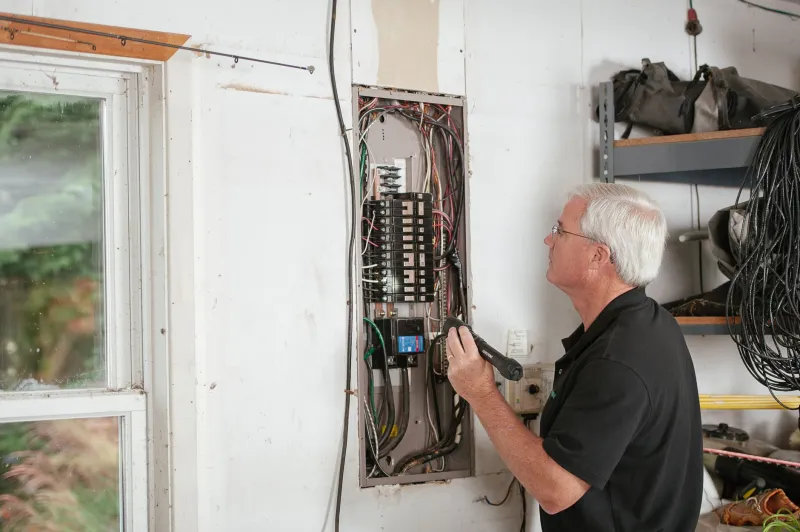
For a more comprehensive view, whole-home energy monitors such as those offered by Sense, Emporia, or Iotawatt install directly into your electrical panel and use current transformers to monitor every circuit simultaneously. These systems use their own disaggregation algorithms — often more refined than utility-grade NILM — and present device-level consumption data through smartphone applications. Setup requires working inside the electrical panel, which is best handled by a licensed electrician, but the ongoing data they provide is substantially more detailed than anything available through a utility portal.
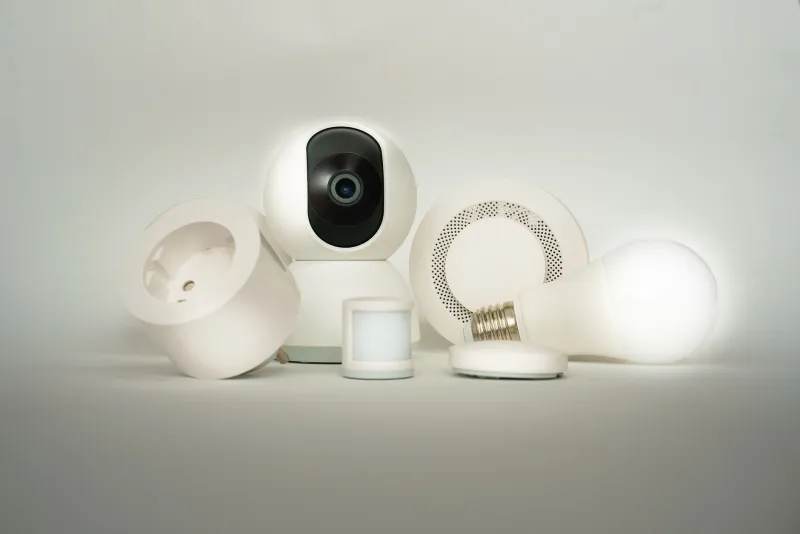
Several smart plug platforms, including those from TP-Link Kasa and Leviton, combine outlet-level control with energy monitoring, allowing homeowners to both measure and remotely cut power to devices identified as chronic standby consumers. A smart plug on a television entertainment stack, for instance, can eliminate the combined standby draw of a TV, soundbar, streaming device, and gaming console with a single scheduled shutoff.
The Devices Most Likely to Be Costing You After Dark
While every home's profile differs, certain categories of devices consistently emerge as disproportionate contributors to overnight and standby consumption.
Older desktop computers and monitors that are left in sleep rather than fully powered off can draw between five and twenty watts continuously. A desktop running overnight every night of the year at ten watts contributes nearly 90 kilowatt-hours annually — roughly $12 to $15 at average US rates, purely for the privilege of sleeping.
Cable boxes and satellite receivers are among the most egregious standby consumers in the American home. Many draw nearly as much power when idle as when actively in use, owing to legacy design decisions made when energy costs were lower and regulatory pressure was minimal. The Natural Resources Defense Council has documented cable boxes drawing 15 to 30 watts continuously, regardless of whether anyone is watching.
Audio-visual receivers and soundbars in standby mode, inkjet printers maintaining ink temperature, and microwave ovens whose clocks draw constant low current all contribute to a background load that, in aggregate, is anything but trivial.
Charging infrastructure presents a more nuanced picture. A phone charger with no phone attached draws minimal current in most modern designs, but older or lower-quality chargers can consume meaningful standby power indefinitely.
A Shift in the Balance of Knowledge
For most of the history of residential electricity service in the United States, utilities held a significant informational advantage over their customers. They knew, in aggregate, how much energy a household used. Customers knew only what they were charged.
That asymmetry is beginning to narrow. Home energy monitoring platforms are becoming more affordable, more accurate, and more capable of translating raw consumption data into actionable guidance. Some utilities are beginning to integrate third-party monitoring data into their customer portals, creating a more complete picture than either party could assemble independently.
At Pipps Energy, we believe that well-informed customers make better energy decisions — decisions that benefit both household budgets and the broader grid. Identifying and eliminating phantom loads does not require a major capital investment or a significant behavioral change. It requires visibility. And for the first time, that visibility is within reach of virtually any homeowner willing to look.
The meter at the edge of your property will continue to count every kilowatt-hour that crosses it. What you choose to do with the knowledge of where those kilowatt-hours are going is now, increasingly, up to you.