Built for a Grid That No Longer Exists: The Looming Write-Down Crisis in Renewable Energy
The economics of renewable energy have improved dramatically over the past fifteen years. The cost of utility-scale solar photovoltaic generation has fallen by more than 90 percent since 2010. Onshore wind is now among the least expensive sources of new electricity generation in most of the United States. By the metrics that dominate public discourse about the energy transition, the story is one of unambiguous progress.
Beneath that headline, a more complicated picture is developing—one that involves stranded assets, misaligned infrastructure timelines, and financial exposures that have not yet been fully recognized on balance sheets or in policy discussions. The core problem is not that renewable energy is failing. It is that the grid architecture required to make renewable energy reliable and economically rational has not materialized on the schedule that investment decisions assumed it would.
What a Stranded Asset Means in an Energy Context
The term "stranded asset" has a specific meaning in the energy industry. It refers to infrastructure—generation capacity, transmission lines, storage facilities—whose economic value has been impaired by changes in market conditions, regulation, or technology before the asset has recovered its development costs. The concept became widely discussed during the coal industry's decline, as utilities wrote down the value of plants that could no longer compete economically and regulators debated who should bear those losses.
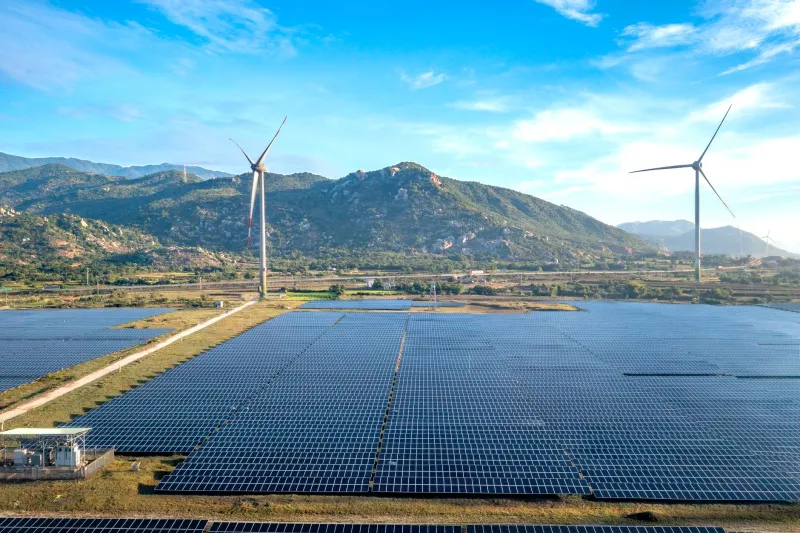
The same dynamic is now emerging, in a different form, within the renewable energy sector. The assets at risk are not coal plants. They are solar arrays and wind farms that were sited, financed, and permitted based on assumptions about the grid they would connect to—assumptions that have proven, in many cases, to be significantly optimistic.
The Storage Timeline Failure
The central assumption that has not held is the pace of utility-scale battery storage deployment. The economic case for large-scale solar and wind development rests partly on the premise that storage would arrive quickly enough and cheaply enough to smooth the intermittency that makes renewable generation difficult to dispatch reliably. Storage would capture surplus generation during periods of high output and release it during periods of low output or high demand, transforming variable renewable resources into something closer to dispatchable generation.
Storage deployment has grown substantially in absolute terms. It has not grown at the pace that many investment models assumed when projects were being financed between 2015 and 2022. Supply chain disruptions, permitting delays, and the technical complexity of integrating large battery systems into existing grid infrastructure have all contributed to a timeline that has slipped by years in many markets.
The consequence is that a significant volume of renewable generation capacity now operates in markets where the grid cannot fully absorb its output at the times when it is available. In California, the nation's largest solar market, the grid operator has repeatedly curtailed renewable generation during midday hours when output exceeds transmission capacity and storage capacity available to absorb it. Curtailment means that generation assets are producing power that cannot be used—and for which their owners are not compensated. An asset that is regularly curtailed is not generating the revenue its financial model projected.
Regional Disparities and the Transmission Bottleneck
The stranded asset risk is not evenly distributed across the country. It is most acute in regions where renewable development has outpaced transmission infrastructure investment—a mismatch that reflects the very different timelines governing these two types of capital expenditure.
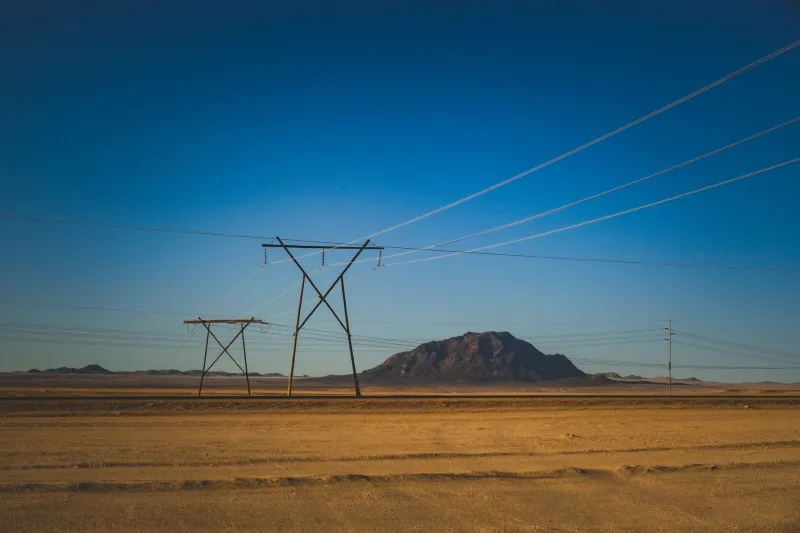
A utility-scale solar project can move from permitting to commercial operation in two to four years under favorable conditions. A new high-voltage transmission line connecting a renewable-rich region to load centers may require ten to fifteen years from initial planning to energization, accounting for environmental review, right-of-way acquisition, regulatory proceedings, and construction. The gap between these timelines is where stranded asset risk accumulates.
Texas presents an instructive case. The state's ERCOT grid has seen extraordinary growth in both wind and solar capacity, and it has invested substantially in transmission infrastructure to move West Texas wind to population centers. Even so, curtailment events have become more frequent as generation capacity growth has again outpaced transmission expansion. Developers who built projects in the western reaches of the state based on transmission availability projections that have since been revised are now operating assets with lower capacity factors and lower revenues than their original models assumed.
In the Southeast, where transmission infrastructure is older and interstate power flows more constrained, renewable developers face a different but related challenge: interconnection queues that have stretched to five years or more in some utilities' service territories, leaving projects in a financial holding pattern that erodes returns and, in some cases, causes developers to abandon projects after spending millions on development costs.
The Ratepayer and Policy Dimensions
The financial losses accumulating in the renewable sector do not stay contained within the balance sheets of developers and investors. They propagate into the broader energy economy in ways that affect utility planning and, ultimately, consumer energy costs.
Utilities that have signed long-term power purchase agreements with renewable developers—contracts that obligate them to pay a fixed price for generation over ten or twenty years—face potential above-market costs if wholesale electricity prices shift in ways that make those contracts expensive relative to alternatives. The cost difference is typically recoverable through rates, meaning ratepayers absorb a portion of the financial consequence.
Meanwhile, utilities that deferred investment in distribution and transmission infrastructure—assuming that storage and demand response would reduce the need for new wires—now face a different set of costs as the grid struggles to integrate generation it was not designed to handle. Infrastructure investment deferred is not investment avoided; it is investment that arrives later, often at higher cost, in response to failures rather than in anticipation of them.
What Policy Can Still Accomplish
The stranded asset problem in renewable energy is not fully determined. Significant portions of the at-risk capacity can be made economically viable if the policy and regulatory environment accelerates the infrastructure development that has lagged behind generation investment.
Transmission permitting reform is the most frequently cited lever. The current federal and state framework for siting and approving new transmission infrastructure is widely regarded as inadequate for the pace of grid transformation underway. Legislative proposals that would streamline environmental review timelines, establish clearer federal authority over interstate transmission corridors, and create financing mechanisms for transmission investment have advanced with varying degrees of success through successive congressional sessions.
Interconnection queue reform—already underway at the Federal Energy Regulatory Commission—has the potential to reduce the development timeline uncertainty that causes projects to stall or fail. By moving from a first-come, first-served individual study process to a cluster-based approach that evaluates multiple projects simultaneously, the reformed process aims to provide faster and more reliable interconnection timelines.
Storage deployment incentives in the Inflation Reduction Act have begun to accelerate investment in battery capacity, though the manufacturing and supply chain infrastructure required to translate that investment into deployed systems at scale continues to develop more slowly than optimistic projections suggested.
The energy transition is not reversing. The investments made in renewable generation represent real capacity that the country needs. What is at stake in the stranded asset discussion is not whether that capacity exists, but whether it can generate sufficient economic returns to sustain continued investment—and whether the grid modernization required to make it fully functional will arrive before the financial write-downs become severe enough to chill the capital markets that renewable development depends on.
At Pipps Energy, we follow these structural dynamics closely because they shape the environment in which all energy decisions—by utilities, policymakers, and individual customers—are made. Understanding the financial architecture of the energy transition is inseparable from understanding its future.